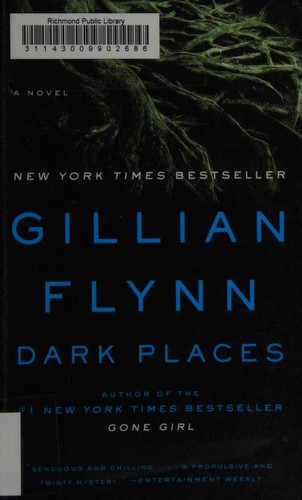
Talk to Dark Places like its author wrote you back.
Get the ideas that fit your life — not generic summaries.
- Chat with the book
- Audiobook-style main ideas
- Adapts to your life and goals
- Helps you take action
What it argues
Libby Day survived the Kansas farmhouse massacre that killed her mother and two sisters when she was seven. Her brother Ben, convicted largely on her childhood testimony, has been in prison for twenty years. Libby is now broke and hollow, making a living selling crime memorabilia, when a group called the Kill Club — amateur crime investigators obsessed with famous murders — offers her money to revisit the case. The novel alternates between Libby's present-day investigation and reconstructed third-person chapters from the night of the murders in 1985, splitting the story between Ben's and their mother Patty's perspectives.
Dark Places is less polished than Gone Girl and more raw. Flynn is interested in what grinding rural poverty does to families — the specific desperation of the Day household in 1985, with Patty unable to feed four children and Ben caught in a web of teenage bad decisions — feels more grounded than the affluent manipulations of Gone Girl. The 1985 chapters are the best writing in the book: Patty's sections in particular have a low-lit naturalistic sadness that carries real weight.
What it gets right
- 1.
Libby Day's testimony convicted her brother — and she gave it as a traumatized seven-year-old prompted by authority figures. The novel is a serious treatment of false memory and coached testimony.
- 2.
The 1985 alternating chapters are structurally crucial: Flynn shows the reader what actually happened while Libby's investigation catches up, creating dramatic irony rather than a standard reveal.
- 3.
Patty Day is one of Flynn's most sympathetic characters — a woman who loves her children and cannot provide for them, making a final decision from love rather than despair.
What it covers
Who wrote it
Gillian Flynn is an American author and screenwriter. Before writing fiction she worked as a television critic at Entertainment Weekly. Gone Girl, her third novel, was published in 2012 and became one of the best-selling thrillers of the decade, adapted into a 2014 David Fincher film with Rosamund Pike and Ben Affleck. Flynn also wrote the screenplay for the film. Her earlier novels — Sharp Objects and Dark Places — are similarly dark in tone and were later adapted as television series. She is known for writing female characters who are genuinely dangerous rather than sympathetic victims.
