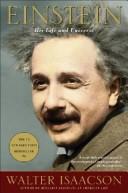
Talk to Einstein: His Life and Universe like its author wrote you back.
Get the ideas that fit your life — not generic summaries.
- Chat with the book
- Audiobook-style main ideas
- Adapts to your life and goals
- Helps you take action
What it argues
Walter Isaacson's Einstein biography is the most widely read account of the physicist's life in English, written after Isaacson was granted access to forty thousand previously sealed documents in the Hebrew University Einstein Archives. The scale of the primary source material allows Isaacson to go well beyond the myth of the dreamy, absent-minded genius who happened to invent relativity. What emerges is a portrait of someone who was difficult, politically complicated, sometimes a poor father and husband, and also one of the most creatively original minds in recorded history.
The scientific core of the book is the period between 1905 and 1915. In 1905, Einstein was a patent clerk who had failed to get an academic job, and he published four papers in a single year that each would have been the career achievement of most physicists — including the special theory of relativity and the paper on the photoelectric effect that won him the Nobel Prize. Isaacson works hard to make the physics accessible without dumbing it down, returning repeatedly to Einstein's own explanation: he asked the same questions as a child that most adults stop asking.
What it gets right
- 1.
Einstein's annus mirabilis of 1905, when he published four transformative papers while working as a patent clerk, is a case study in what creative independence from institutional pressure can produce.
- 2.
His thought experiments — imagining riding alongside a light beam at seventeen, asking what happens to time if you travel near the speed of light — were his primary scientific tool, and more imaginative than mathematical.
- 3.
Isaacson argues that Einstein's rebelliousness against authority, formed in childhood, was the same quality that allowed him to question absolute time and space when every physicist assumed both.
What it covers
Who wrote it
Walter Isaacson is an American author, journalist, and former CEO of the Aspen Institute. He has written bestselling biographies of Leonardo da Vinci, Steve Jobs, Benjamin Franklin, and Henry Kissinger, as well as The Innovators, a history of the digital revolution. He was managing editor of Time magazine and chairman of CNN before turning to full-time writing. His Einstein biography drew on forty thousand previously sealed documents from the Hebrew University archives in Jerusalem. He is a professor at Tulane University.
