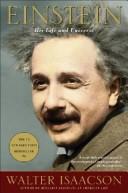
Einstein: His Life and Universe by Walter Isaacson is a 2007 biography book about creativity, science, nonconformity. Einstein's annus mirabilis of 1905, when he published four transformative papers while working as a patent clerk, is a case study in what creative independence from institutional pressure can produce.
Summary
Walter Isaacson's Einstein biography is the most widely read account of the physicist's life in English, written after Isaacson was granted access to forty thousand previously sealed documents in the Hebrew University Einstein Archives. The scale of the primary source material allows Isaacson to go well beyond the myth of the dreamy, absent-minded genius who happened to invent relativity. What emerges is a portrait of someone who was difficult, politically complicated, sometimes a poor father and husband, and also one of the most creatively original minds in recorded history.
The scientific core of the book is the period between 1905 and 1915. In 1905, Einstein was a patent clerk who had failed to get an academic job, and he published four papers in a single year that each would have been the career achievement of most physicists — including the special theory of relativity and the paper on the photoelectric effect that won him the Nobel Prize. Isaacson works hard to make the physics accessible without dumbing it down, returning repeatedly to Einstein's own explanation: he asked the same questions as a child that most adults stop asking.
The biography is also a political story. Einstein was a pacifist during World War I, a Zionist who had complicated views about the actual creation of Israel, a public opponent of German nationalism, and a target of FBI surveillance for two decades after emigrating to America. His political courage — refusing to testify against former colleagues during McCarthyism, writing to FDR about the bomb, speaking against nuclear proliferation until his death — is treated as of a piece with his scientific originality: both required ignoring received authority.
The post-1920 decades are less exciting scientifically. Einstein's long battle against quantum mechanics — his insistence that "God does not play dice" — positioned him on what history judged to be the wrong side of the central debate in physics. Isaacson treats this honestly as a failure of imagination, notable precisely because it came from someone whose imagination had been the most powerful in the field. The book doesn't flinch at the irony.
Talk to Einstein: His Life and Universe like its author wrote you back.
Get the ideas that fit your life — not generic summaries.
- Chat with the book
- Audiobook-style main ideas
- Adapts to your life and goals
- Helps you take action
Key takeaways
- 1.
Einstein's annus mirabilis of 1905, when he published four transformative papers while working as a patent clerk, is a case study in what creative independence from institutional pressure can produce.
- 2.
His thought experiments — imagining riding alongside a light beam at seventeen, asking what happens to time if you travel near the speed of light — were his primary scientific tool, and more imaginative than mathematical.
- 3.
Isaacson argues that Einstein's rebelliousness against authority, formed in childhood, was the same quality that allowed him to question absolute time and space when every physicist assumed both.
- 4.
Special relativity emerged from taking seriously two facts everyone knew but no one had reconciled: the laws of physics are the same for all observers moving at constant speeds, and the speed of light is the same for all observers.
- 5.
General relativity, Einstein's greatest achievement, extended special relativity to acceleration and gravity, redefining gravity not as a force but as curvature in spacetime.
- 6.
Einstein's opposition to quantum mechanics in his later career — including the EPR paradox and 'God does not play dice' — shows how even the most creative thinkers can become defenders of frameworks they themselves overturned.
- 7.
His political courage was consistent: public opposition to both world wars, to nuclear weapons, to McCarthyism, to racism in America, to the actual policies of the Israeli state he helped establish.
- 8.
Einstein's personal life was a series of failures alongside the scientific triumphs: a neglected first family, a manipulative relationship with his cousin Elsa, and an emotionally distant relationship with both sons.
Discussion questions
Use these on your own, with a book club, or as chat starters in Superbook. Book club version, ready to copy or print →
- 1.
Isaacson argues that Einstein's scientific originality and his political nonconformity came from the same source. Do you find that argument convincing? Can you think of counterexamples?
- 2.
The thought experiment — imagining riding alongside a beam of light — is Einstein's signature tool. What are the thought experiments that structure how you reason about your own field?
- 3.
Einstein couldn't get an academic job in his twenties, which forced him to think outside academic orthodoxy. How much does institutional position shape what questions people allow themselves to ask?
- 4.
His 1905 miracle year happened while he was working full-time as a patent clerk. What does that suggest about the relationship between creative work and the constraints of regular employment?
- 5.
Einstein's rejection of quantum mechanics in his later career is one of the most discussed failures in the history of science. How do you distinguish between principled resistance to a flawed consensus and a failure to update your views?
- 6.
Isaacson gives significant space to Einstein's personal failings — his abandonment of his first family, his treatment of Mileva. Does knowing that change how you think about his scientific legacy?
- 7.
Einstein was under FBI surveillance for twenty years. What does the fear of a physicist tell you about the political climate of mid-century America?
- 8.
He became the most famous person in the world after the 1919 eclipse confirmed general relativity. How did fame change the science he produced and the political positions he took?
- 9.
Einstein corresponded extensively with philosophers and refused to accept that quantum mechanics was complete. Was he right that there had to be hidden variables, or was he just wrong? What does the history of physics say?
- 10.
Isaacson makes Einstein's curiosity sound learnable. Is that convincing, or does the sheer scale of Einstein's originality suggest something beyond curiosity?
- 11.
The atomic bomb used physics Einstein had helped develop. His relationship to that — writing to FDR to warn of German bomb development, then opposing nuclear weapons — is complicated. How do you think about scientists' moral responsibility for the applications of their work?
- 12.
Einstein said the most beautiful experience we can have is the mysterious. Looking at your own work, where have you last had that experience?
Themes
Frequently asked questions
-
What is Einstein: His Life and Universe about?
It's a comprehensive biography drawing on newly available primary sources that covers Einstein's scientific work — from the 1905 miracle year through general relativity — alongside his political life as a pacifist, Zionist, and opponent of McCarthyism, and his complicated personal relationships.
-
Do you need to understand physics to read this biography?
No. Isaacson works hard to make the key ideas accessible through Einstein's own thought experiments. You won't come away able to solve field equations, but you'll understand what relativity actually means and why it was revolutionary.
-
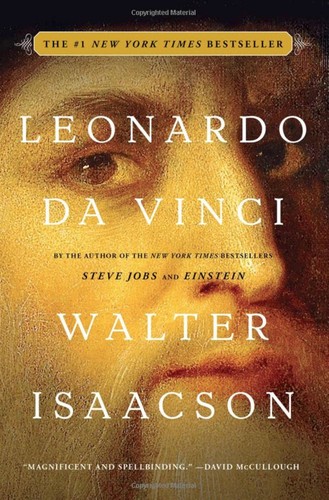
How does Isaacson's Einstein biography compare to his Leonardo da Vinci?
Both argue that the subject's genius was rooted in curiosity and nonconformity rather than innate talent alone. Einstein is more historically grounded and more scientific in its ambition; Leonardo is richer in visual detail. Both are long and reward attention.
-
Is Einstein: His Life and Universe worth reading?
Yes, especially for the first half covering the 1905-1915 period and the political chapters. It's long at roughly 550 pages and occasionally dense on the physics, but Isaacson's access to new archival material produced a more nuanced and honest portrait than previous accounts.
-
What was Einstein's biggest mistake according to the book?
His decades-long opposition to quantum mechanics. Starting in the 1920s, Einstein argued that the theory was incomplete and that physical reality must have definite properties independent of observation. Experiment after experiment has since confirmed quantum mechanics. Isaacson treats this as a genuine failure — not a crank position, but an honest intellectual mistake by the man who had previously overturned everyone else's assumptions.