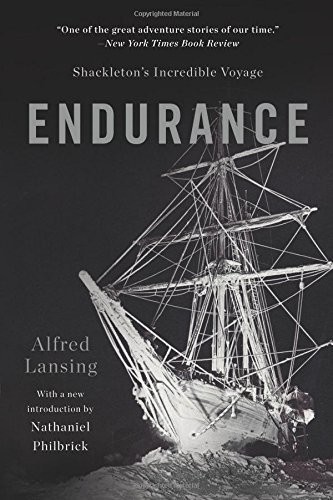
Talk to Endurance: Shackleton's Incredible Voyage like its author wrote you back.
Get the ideas that fit your life — not generic summaries.
- Chat with the book
- Audiobook-style main ideas
- Adapts to your life and goals
- Helps you take action
What it argues
In 1914, Ernest Shackleton led twenty-seven men into the Weddell Sea on a ship called the Endurance with the goal of crossing Antarctica on foot. The ice closed in before they ever reached land. What followed was nearly two years of survival — drifting on pack ice, living in makeshift camps, and eventually crossing 800 miles of the world's worst ocean in a modified lifeboat. Alfred Lansing reconstructed the story in the 1950s by interviewing surviving crew members and working from their diaries. The result is one of the most precise accounts of group survival ever written.
Lansing structures the book as a day-by-day chronicle, which creates an almost unbearable accumulation of hardship. The ship is crushed and sinks. The men haul three small lifeboats across shifting ice for months, killing their sled dogs for food. When the ice finally breaks up, they make for an uninhabited island. Shackleton then takes five men in an open 22-foot boat through the Drake Passage to South Georgia Island — a journey most seasoned sailors considered suicidal — to fetch rescue for the rest. Every man on the expedition survived.
What it gets right
- 1.
Shackleton's entire expedition was stranded in pack ice for nearly two years, yet every one of the twenty-seven men survived — a result that had more to do with leadership than luck.
- 2.
Morale is a survival variable. Shackleton treated crew cohesion as a practical necessity, not a nicety, and made decisions — tent assignments, food portions, labor — with its preservation in mind.
- 3.
Routine imposes structure when circumstances offer none. Even on drifting ice with nothing productive to do, Shackleton kept the crew on a schedule of meals, work, and social time.
What it covers
Who wrote it
Alfred Lansing was an American journalist and author who spent years interviewing the surviving crew members of the Endurance expedition and working through their diaries and photographs before writing this account, first published in 1959. Lansing had no prior books to his name when Endurance appeared; it remains his most enduring work and is widely considered the definitive account of the voyage. He died in 1975. The book has been continuously in print for over six decades and has influenced nearly every subsequent writer who has covered polar exploration or extreme survival.
