Endurance: Shackleton's Incredible Voyage by Alfred Lansing is a 1959 history book about survival, leadership, resilience. Shackleton's entire expedition was stranded in pack ice for nearly two years, yet every one of the twenty-seven men survived — a result that had more to do with leadership than luck.
Summary
In 1914, Ernest Shackleton led twenty-seven men into the Weddell Sea on a ship called the Endurance with the goal of crossing Antarctica on foot. The ice closed in before they ever reached land. What followed was nearly two years of survival — drifting on pack ice, living in makeshift camps, and eventually crossing 800 miles of the world's worst ocean in a modified lifeboat. Alfred Lansing reconstructed the story in the 1950s by interviewing surviving crew members and working from their diaries. The result is one of the most precise accounts of group survival ever written.
Lansing structures the book as a day-by-day chronicle, which creates an almost unbearable accumulation of hardship. The ship is crushed and sinks. The men haul three small lifeboats across shifting ice for months, killing their sled dogs for food. When the ice finally breaks up, they make for an uninhabited island. Shackleton then takes five men in an open 22-foot boat through the Drake Passage to South Georgia Island — a journey most seasoned sailors considered suicidal — to fetch rescue for the rest. Every man on the expedition survived.
The book is less interested in heroics than in the mechanics of how a group holds together under sustained, almost incomprehensible stress. Shackleton comes across as a pragmatic leader who understood morale as a survival variable. He distributed tents, sleeping bags, and food not by rank but by need. He kept men occupied with routines when there was nothing useful to do. He made decisions transparently and shared hardship visibly. The crew's diaries reveal men who were frightened, irritable, and homesick — which makes their eventual cohesion more credible than if they had been cast as stoics.
Lansing's prose is unadorned and precise, trusting the events to carry the weight. The book doesn't editorialize about what Shackleton's methods mean or draw management lessons. Readers looking for a framework will have to extract it themselves. What Lansing gives instead is something harder to find: an unbroken record of what it actually looked and felt like, hour by hour, for twenty-seven people to choose to keep going when stopping would have been easier.
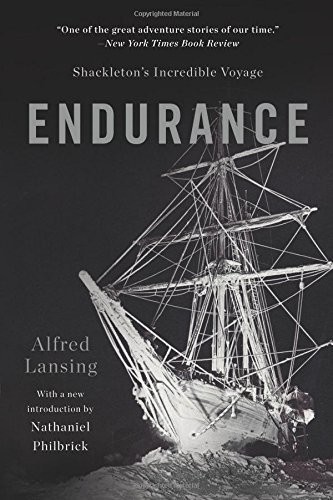
Talk to Endurance: Shackleton's Incredible Voyage like its author wrote you back.
Get the ideas that fit your life — not generic summaries.
- Chat with the book
- Audiobook-style main ideas
- Adapts to your life and goals
- Helps you take action
Key takeaways
- 1.
Shackleton's entire expedition was stranded in pack ice for nearly two years, yet every one of the twenty-seven men survived — a result that had more to do with leadership than luck.
- 2.
Morale is a survival variable. Shackleton treated crew cohesion as a practical necessity, not a nicety, and made decisions — tent assignments, food portions, labor — with its preservation in mind.
- 3.
Routine imposes structure when circumstances offer none. Even on drifting ice with nothing productive to do, Shackleton kept the crew on a schedule of meals, work, and social time.
- 4.
The James Caird voyage — 800 miles in an open lifeboat through the Drake Passage — is considered one of the greatest small-boat journeys in history, navigated by dead reckoning in near-continuous storm.
- 5.
Hardship compounds unpredictably. The crew dealt with successive losses: the ship, the dogs, the hope of early rescue. Each loss had to be absorbed before the next problem could be faced.
- 6.
Shackleton rotated difficult people into his own tent rather than isolating them, keeping potential dissenters close and neutralizing conflict before it spread.
- 7.
The survival of the group depended on decisions made in the first hours of each crisis. Lansing's account shows how the quality of early choices shaped every option that came after.
- 8.
No one on the expedition was selected for psychological resilience — they were sailors and scientists. What carried them through was structure, leadership, and the absence of hopelessness being permitted to take hold.
Discussion questions
Use these on your own, with a book club, or as chat starters in Superbook. Book club version, ready to copy or print →
- 1.
Shackleton kept difficult crew members in his own tent rather than pushing them away. Is that a leadership instinct you've ever used or seen used? What was the result?
- 2.
The crew knew for months that rescue was unlikely. At what point does maintaining hope become a practical leadership tool rather than a form of denial?
- 3.
Lansing deliberately avoids drawing management lessons. Does that restraint make the book more useful or less useful to you as a reader trying to apply it?
- 4.
The men kept diaries throughout the ordeal. What does that fact tell you about how people process extreme experiences, and does it change how you read their accounts?
- 5.
Shackleton distributed hardship visibly — sleeping in the worst spots, taking the worst food. How much of that was genuine selflessness and how much was calculated morale management?
- 6.
Which decision in the book strikes you as the most consequential? Would you have made the same call with the same information?
- 7.
The crew had months of near-total inaction on the ice. How did that enforced passivity shape the men who came through it, versus how it might have broken others?
- 8.
Lansing reconstructed the story from diaries and interviews decades later. What does that remove from the account, and what does the distance add?
- 9.
Every man survived. Does that outcome make it harder or easier to think clearly about the choices that were made along the way?
- 10.
Shackleton's original mission — crossing Antarctica — never happened. How do you weigh the expedition against its stated goal?
- 11.
The James Caird voyage required trusting one navigator's dead reckoning with everyone's lives. What's the last time you had to place that kind of unverifiable trust in someone else's judgment?
- 12.
If the expedition had lost even one man, how would that change the story Lansing tells? How would it change the way we remember Shackleton?
Themes
Frequently asked questions
-
Is Endurance worth reading?
Yes, particularly if you want a survival account that is grounded in primary sources rather than dramatized. Lansing worked directly from the crew's diaries and spent years interviewing survivors. The book reads quickly because the events are genuinely extraordinary, but it earns its reputation through precision, not spectacle.
-
How long does it take to read Endurance?
Around six hours at average reading pace. The chapters are short and propulsive, and most readers find it difficult to stop at natural breaks. It works well read in long sittings — the accumulative weight of the narrative builds steadily and loses something if read in small fragments.
-
What is Endurance about?
Shackleton's 1914 Imperial Trans-Antarctic Expedition, which became stranded in pack ice before reaching land. The ship was eventually crushed and sank. Lansing traces the twenty-two-month survival of twenty-seven men — culminating in an 800-mile open-boat voyage across the Drake Passage — that ended without a single fatality.
-
Who should read Endurance?
Anyone interested in leadership under pressure, survival narratives, or Antarctic history. It appeals equally to readers who wouldn't normally pick up history and to readers who have read widely in the genre. It requires no prior knowledge of polar exploration.
-
What makes Shackleton's leadership in the book distinctive?
He treated morale as a tactical problem. He distributed hardship visibly, kept potential troublemakers close, maintained routines when they served no practical purpose, and made the group's survival feel like a shared project rather than a series of commands. Lansing shows this through the crew's own words rather than through retrospective praise.
Similar books
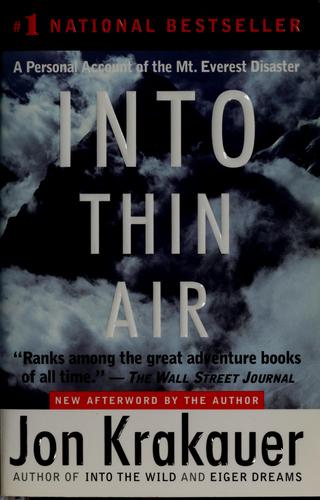
Into Thin Air
Jon Krakauer
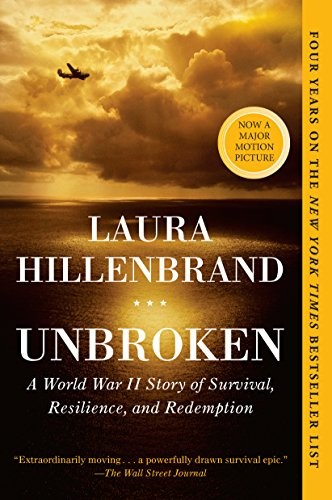
Unbroken: A World War II Story of Survival, Resilience, and Redemption
Laura Hillenbrand
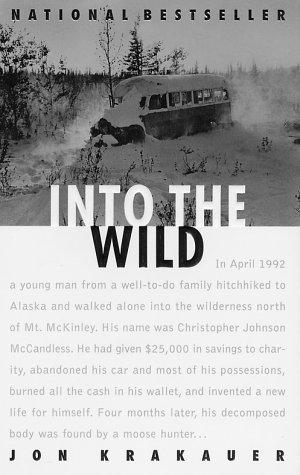
Into the Wild
Jon Krakauer

Wild: From Lost to Found on the Pacific Crest Trail
Cheryl Strayed
