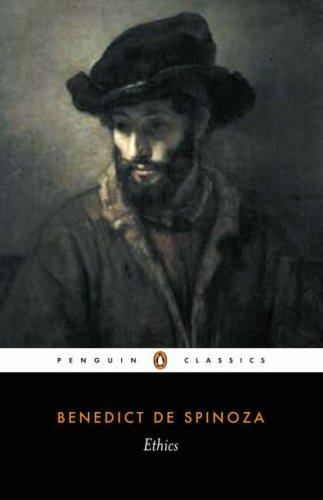
Talk to Ethics like its author wrote you back.
Get the ideas that fit your life — not generic summaries.
- Chat with the book
- Audiobook-style main ideas
- Adapts to your life and goals
- Helps you take action
What it argues
Spinoza's Ethics, published posthumously in 1677, is one of the most systematically ambitious works in Western philosophy. It is written in the geometric method — definitions, axioms, propositions, demonstrations, and corollaries organized like Euclidean proofs — which is simultaneously its most impressive and most forbidding feature. Spinoza's goal was to derive the nature of God, the structure of the mind, the mechanics of the emotions, and the path to human freedom through chains of necessary logical inference rather than revelation or tradition.
The metaphysical foundation is Spinoza's pantheism, or what he called Deus sive Natura — God or Nature. There is one substance, infinite and self-causing, and everything that exists is a mode of that substance. This means that God does not stand apart from the world, making choices about it; God is the world, understood as a system of necessary causes. Human beings are not exceptional. The mind and body are not two substances but two attributes — thought and extension — of the same underlying reality.
What it gets right
- 1.
Spinoza identifies God with Nature: there is one infinite substance, and everything that exists is a mode of it. This pantheism rules out a personal god who makes free choices.
- 2.
Mind and body are not separate substances but two attributes of the same thing — thought and extension. Parallelism, not interaction, describes their relationship.
- 3.
Human emotions arise from inadequate ideas: partial, confused understanding of the causes that affect us. Increasing knowledge transforms passive affects into active ones.
What it covers
Who wrote it
Baruch Spinoza (1632–1677) was a Dutch philosopher of Sephardic Jewish origin who was excommunicated from his Amsterdam community in 1656. He worked as a lens grinder while developing his philosophical system in private, declining academic appointments that would have required compromising his views. His major works — the Theological-Political Treatise and the Ethics — were either controversial on publication or published posthumously. He is now considered one of the central figures of seventeenth-century rationalism and a major influence on the Enlightenment.
