Talk to Execution like its author wrote you back.
Get the ideas that fit your life — not generic summaries.
- Chat with the book
- Audiobook-style main ideas
- Adapts to your life and goals
- Helps you take action
Execution, in detail
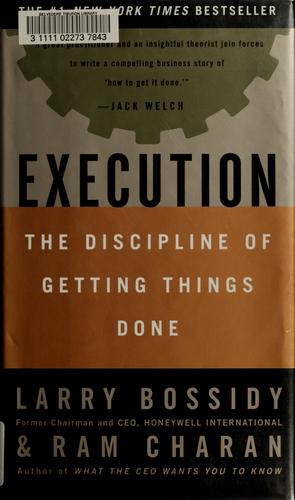
Execution is Larry Bossidy and Ram Charan's argument that the biggest gap in business is not strategy but implementation. Most strategies fail not because they are wrong but because the organization lacks the discipline, processes, and leaders to carry them out. Bossidy, the former CEO of AlliedSignal and Honeywell, provides the operational experience; Charan provides the analytical framework.
The book's central claim is that execution is a discipline, not a detail — and that senior leaders who treat it as beneath them are the primary cause of their organization's underperformance. The authors identify three core processes: the people process (who fills which roles), the strategy process (which choices guide resource allocation), and the operations process (how performance is managed quarterly). They argue that the people process is the most important and the most neglected: leaders who get the right people into the right roles before deciding strategy will outperform those who do it in the conventional order.
Bossidy's voice dominates the book's most engaging sections — direct, occasionally blunt accounts of how he ran operating reviews at AlliedSignal. The operating review as described is substantive: not a presentation of how things are going but an honest conversation about what is and isn't working, who is and isn't performing, and what needs to change. The authors argue that leaders who avoid these conversations in the name of collegiality are actually being unkind, because they leave underperformers in roles where they will fail.
The book is rooted in large industrial companies of the 1990s and early 2000s, and some of its specific practices show that age. But the underlying argument — that execution requires sustained personal attention from senior leaders, honest assessment of people and plans, and consistent follow-through — has not dated. Where it is most useful is in naming the behaviors that separate leaders who get results from those who generate thoughtful strategies that quietly die.
The big ideas
- 1.
Execution is not a tactical detail but a discipline that senior leaders must personally own. Delegating it entirely is how strategies fail.
- 2.
The people process is more important than the strategy process. The right people in the right roles will fix a flawed strategy; the wrong people will ruin a good one.
- 3.
Most organizations promote people based on past performance rather than future potential. Evaluating people for execution requires asking what they do when the plan meets reality.
