Talk to Fierce Conversations like its author wrote you back.
Get the ideas that fit your life — not generic summaries.
- Chat with the book
- Audiobook-style main ideas
- Adapts to your life and goals
- Helps you take action
What it argues
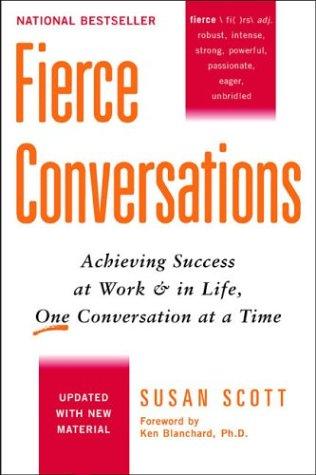
Fierce Conversations is Susan Scott's argument that the quality of your relationships is determined by the quality of your conversations — and that the conversations most people avoid are precisely the ones that would most improve their relationships and results. Scott founded her executive training company, Fierce, Inc., after spending years helping executives have the conversations they were afraid to have, and this book distills that experience.
The title's "fierce" is not aggressive — it means something closer to "alive and passionate." A fierce conversation is one where both parties are genuinely present, honest, and willing to be changed by what they hear. Scott's contrast is the "managed conversation," where both parties know what will and won't be said and nothing of consequence gets addressed. Most organizational conversations are managed; the conversations that move things forward are fierce.
What it gets right
- 1.
The conversations you're not having are making decisions for you. Avoiding a conversation doesn't make the underlying issue go away — it makes it worse.
- 2.
Fierce means real, not aggressive. A fierce conversation is one where you're genuinely present, honest, and willing to be changed by what the other person has to say.
- 3.
The emotional wake is the effect your presence and manner leave on people after interactions. Leaders who are unaware of their wake cause damage they never see.
What it covers
Who wrote it
Susan Scott is the founder and CEO of Fierce, Inc., a leadership development and training company. She spent thirteen years as a highly regarded CEO and executive trainer before writing Fierce Conversations, and has been training business leaders for more than thirty-five years. Her clients have included Boeing, Hyatt, Starbucks, and the World Bank. She is also the author of Fierce Leadership, which extends the Fierce Conversations framework to organizational culture and team dynamics.
