Talk to Financial Freedom like its author wrote you back.
Get the ideas that fit your life — not generic summaries.
- Chat with the book
- Audiobook-style main ideas
- Adapts to your life and goals
- Helps you take action
Financial Freedom, in detail
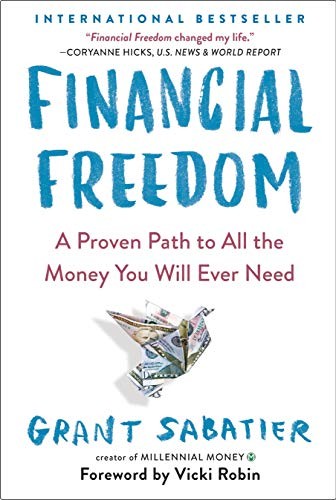
Financial Freedom is Grant Sabatier's account of how he went from $2.26 in his bank account at age 24 to financially independent at 30, and the principles he extracted from that experience into a guide for others pursuing the same goal. Sabatier runs the Millennial Money blog and positioned this book as the FIRE (financial independence, retire early) movement's comprehensive modern guide — addressing not just the investment side but the income generation, psychological preparation, and life design questions that standard personal finance books often skip.
Sabatier's starting proposition is that achieving financial independence in years rather than decades requires working on both sides of the equation simultaneously: increasing income and optimizing spending, not just one or the other. He is more aggressive than most FIRE books about income growth, dedicating significant space to salary negotiation, side hustles, business building, and finding work that pays better in less time. This dual focus distinguishes the book from approaches that primarily emphasize frugality.
The investment framework follows the evidence-based consensus: low-cost index funds, tax-advantaged accounts maxed before taxable, a savings rate aggressive enough to generate the accumulation needed at the target retirement date. Sabatier calculates what different savings rates imply for time to financial independence — a 50 percent savings rate gets you there in roughly 17 years; a 75 percent savings rate in under 10 — and uses these projections to make the impact of savings rate decisions concrete.
The book's most distinctive contribution is the life design section. Sabatier argues that the point of financial independence is not to stop working but to have the freedom to work on what you choose. He addresses the psychological preparation for leaving traditional employment, the questions of identity and purpose that arrive when work is no longer obligatory, and how to evaluate what you actually want to do with time freedom before you achieve it. These questions are often ignored in financial independence writing, and Sabatier's treatment of them adds genuine value beyond the financial framework.
The big ideas
- 1.
Financial independence requires working both sides: increasing income and reducing spending simultaneously. A focus on only one side extends the timeline significantly.
- 2.
Your savings rate, more than your investment returns, determines how quickly you reach financial independence. Moving from 20% to 50% savings rate cuts the timeline dramatically.
- 3.
The target number is 25 times annual expenses. Every dollar you eliminate from ongoing spending reduces the required target by 25 dollars — spending reduction is leveraged.
