Talk to Food Rules like its author wrote you back.
Get the ideas that fit your life — not generic summaries.
- Chat with the book
- Audiobook-style main ideas
- Adapts to your life and goals
- Helps you take action
What it argues
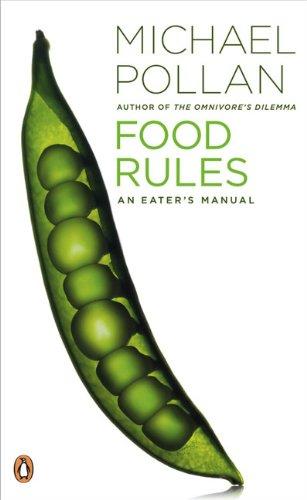
Food Rules is Michael Pollan's shortest and most direct book: sixty-four simple rules for eating, distilled from his longer works and from the accumulated wisdom of food cultures around the world. The entire book is organized around the seven-word manifesto he introduced in In Defense of Food: eat food, not too much, mostly plants. Everything else is elaboration.
The rules are organized in three parts matching those seven words. Eating food means eating things your great-grandmother would recognize as food — not the engineered products of industrial food science. Pollan offers rules of thumb for identifying real food: if it contains more than five ingredients, if it contains ingredients a third-grader can't pronounce, if it makes a health claim on the packaging, it probably isn't food in the sense he means. Not too much involves rules about when, how, and how much to eat — stop eating before you're full, eat at the table, cook your own food, treat treats as treats. Mostly plants speaks for itself, but Pollan nuances it: eat a variety of plants, eat plants with leaves rather than just seeds, and regard meat as a flavoring more than a centerpiece.
What it gets right
- 1.
Eat food, not too much, mostly plants. Pollan's seven-word summary replaces virtually all complex nutritional advice with three principles derived from traditional food cultures.
- 2.
The Western diet — high in processed food, refined carbohydrates, added sugars, and industrial seed oils — is associated with a cluster of chronic diseases almost unknown in cultures that don't eat it.
- 3.
If a product makes a health claim on the packaging, be skeptical. Real food doesn't need to advertise its nutritional value.
What it covers
Who wrote it
Michael Pollan is an American author and journalist whose work focuses on food, agriculture, and the human relationship with the natural world. His books include The Omnivore's Dilemma, In Defense of Food, and How to Change Your Mind. He taught for many years at Harvard and UC Berkeley. Pollan helped bring food systems and food politics into mainstream public conversation in the United States, and Food Rules distills the practical conclusions of his longer investigative work into an accessible format.
