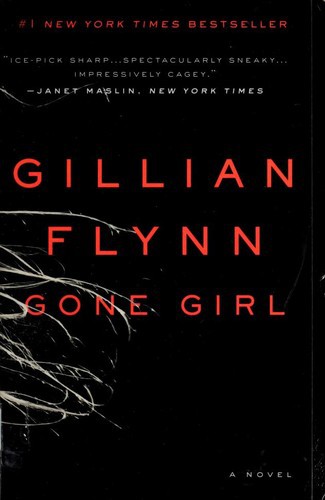
Talk to Gone Girl like its author wrote you back.
Get the ideas that fit your life — not generic summaries.
- Chat with the book
- Audiobook-style main ideas
- Adapts to your life and goals
- Helps you take action
What it argues
On the morning of their fifth wedding anniversary, Amy Dunne disappears from her home in Missouri. Her husband Nick becomes the chief suspect. The novel is told in alternating voices — Nick's present-tense account of the investigation and the media circus, and Amy's diary entries from the years of their marriage — until the midpoint twist that reframes everything the reader thought they understood about both narrators.
Flynn is doing something specific: Gone Girl is a novel about the performance of marriage, and specifically about the pressure on women to perform a version of femininity that exhausts and erases them. Amy's "Cool Girl" monologue — a sustained rage against the persona women construct to be desirable — is the novel's philosophical core. But Flynn is too smart to let Amy be simply right. The book's structure implicates both of them in a competition for narrative control where the reader is also a participant.
What it gets right
- 1.
The 'Cool Girl' monologue is among the sharpest pieces of feminist cultural criticism embedded in a mainstream thriller — Amy's anger about performed femininity is the novel's real engine.
- 2.
Both narrators are unreliable in different ways: Nick withholds; Amy fabricates. Flynn makes the reader complicit by making each voice persuasive on its own terms.
- 3.
The structure — alternating diary and present-tense — is not just a gimmick. It's a formal argument about how narratives of marriage are constructed selectively.
What it covers
Who wrote it
Gillian Flynn is an American author and screenwriter. Before writing fiction she worked as a television critic at Entertainment Weekly. Gone Girl, her third novel, was published in 2012 and became one of the best-selling thrillers of the decade, adapted into a 2014 David Fincher film with Rosamund Pike and Ben Affleck. Flynn also wrote the screenplay for the film. Her earlier novels — Sharp Objects and Dark Places — are similarly dark in tone and were later adapted as television series. She is known for writing female characters who are genuinely dangerous rather than sympathetic victims.
