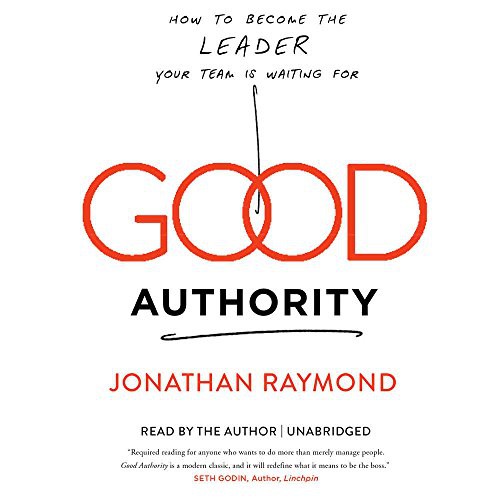
Talk to Good Authority like its author wrote you back.
Get the ideas that fit your life — not generic summaries.
- Chat with the book
- Audiobook-style main ideas
- Adapts to your life and goals
- Helps you take action
What it argues
Good Authority is Jonathan Raymond's argument that the real job of a manager is not to produce results directly but to use the work as a vehicle for people's personal and professional development. Raymond's central claim is that most managers oscillate between two failure modes: being overly permissive (avoiding difficult conversations, tolerating underperformance) or overly controlling (micromanaging, issuing ultimatums). Neither works. The alternative he proposes is what he calls "good authority" — the willingness to hold people accountable in a way that genuinely cares about their growth.
The book introduces what Raymond calls the Employee Lifecycle, a framework for thinking about where each person on a team is in their development and what kind of support and accountability that stage requires. Early-stage employees need orientation and explicit guidance. Mid-stage employees need challenging conversations and clear expectations. Late-stage employees need either a path to greater responsibility or an honest exit conversation. Most managers, Raymond argues, skip the middle stage entirely — either hoping problems resolve themselves or waiting until termination becomes inevitable.
What it gets right
- 1.
Good authority is the willingness to hold people accountable while genuinely caring about their development — not permissiveness, and not control.
- 2.
Most managers skip the middle accountability conversations that address minor issues early, waiting instead until problems are serious enough to require formal action.
- 3.
The Employee Lifecycle framework identifies three stages of development that require different management approaches: orientation, accountability, and either advancement or exit.
What it covers
Who wrote it
Jonathan Raymond is an entrepreneur, coach, and writer who served as CEO of E-Myth Worldwide, the company founded by Michael Gerber. He founded Refound, a leadership development and coaching organization focused on workplace accountability and culture change. Raymond's work draws on his experience coaching managers across a wide range of industries and his observation that most management failures come not from a lack of technical skill but from the avoidance of honest human conversations. Good Authority is his first book.
