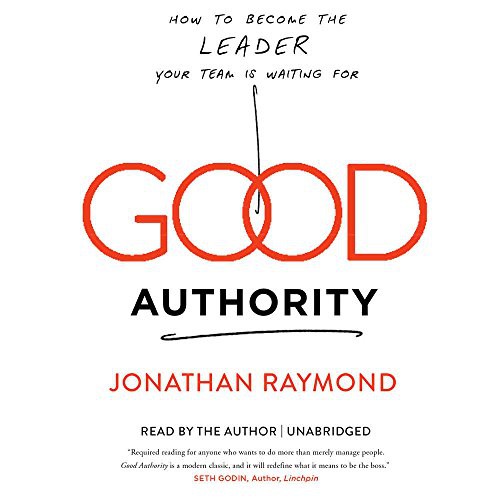
Good Authority by Jonathan Raymond is a 2016 business book about management, accountability, employee development. Good authority is the willingness to hold people accountable while genuinely caring about their development — not permissiveness, and not control.
Summary
Good Authority is Jonathan Raymond's argument that the real job of a manager is not to produce results directly but to use the work as a vehicle for people's personal and professional development. Raymond's central claim is that most managers oscillate between two failure modes: being overly permissive (avoiding difficult conversations, tolerating underperformance) or overly controlling (micromanaging, issuing ultimatums). Neither works. The alternative he proposes is what he calls "good authority" — the willingness to hold people accountable in a way that genuinely cares about their growth.
The book introduces what Raymond calls the Employee Lifecycle, a framework for thinking about where each person on a team is in their development and what kind of support and accountability that stage requires. Early-stage employees need orientation and explicit guidance. Mid-stage employees need challenging conversations and clear expectations. Late-stage employees need either a path to greater responsibility or an honest exit conversation. Most managers, Raymond argues, skip the middle stage entirely — either hoping problems resolve themselves or waiting until termination becomes inevitable.
Much of the book is devoted to practical tools for the middle stage: how to raise issues early when they're still minor, how to frame feedback in terms of patterns rather than incidents, and how to hold someone accountable without becoming adversarial. Raymond's approach is grounded in his experience running the E-Myth Worldwide consulting company and coaching managers across industries, and the examples throughout the book are specific enough to feel recognizable.
The book's scope is narrow — it is almost entirely focused on the manager-direct-report relationship — and readers looking for broader organizational theory will need to look elsewhere. But within that scope it is unusually concrete. The feedback frameworks, conversation templates, and accountability structures Raymond provides are immediately applicable, which makes the book valuable for managers who are struggling with the specific problem of underperformance or who feel that their relationships with direct reports have become either too distant or too tense.
Talk to Good Authority like its author wrote you back.
Get the ideas that fit your life — not generic summaries.
- Chat with the book
- Audiobook-style main ideas
- Adapts to your life and goals
- Helps you take action
Key takeaways
- 1.
Good authority is the willingness to hold people accountable while genuinely caring about their development — not permissiveness, and not control.
- 2.
Most managers skip the middle accountability conversations that address minor issues early, waiting instead until problems are serious enough to require formal action.
- 3.
The Employee Lifecycle framework identifies three stages of development that require different management approaches: orientation, accountability, and either advancement or exit.
- 4.
Feedback is most effective when it addresses patterns of behavior rather than isolated incidents. Naming the pattern gives the person something meaningful to respond to.
- 5.
Managers who avoid difficult conversations believe they're being kind. Raymond argues they are actually depriving people of the feedback they need to grow.
- 6.
An exit conversation, delivered honestly and respectfully, can be one of the most developmental interactions a manager ever has — if it comes as the result of a genuine accountability process rather than a surprise.
- 7.
The manager's job is to use the work as a vehicle for development. The goal is not just task completion but helping people become who they're capable of becoming.
Discussion questions
Use these on your own, with a book club, or as chat starters in Superbook. Book club version, ready to copy or print →
- 1.
Raymond says most managers avoid the middle accountability conversations. What makes those conversations feel riskier than either tolerating the problem or escalating to termination?
- 2.
Think of a time when someone held you accountable in a way that genuinely helped you grow. What made it effective?
- 3.
Raymond frames feedback in terms of patterns rather than incidents. For a current direct report or colleague, what pattern would you name if you were being genuinely honest?
- 4.
The Employee Lifecycle framework sorts people into orientation, accountability, and advancement/exit stages. Where would you place each person on your team right now?
- 5.
Raymond argues that avoiding a difficult conversation is not kindness but deprivation. Do you agree? Where does that logic have limits?
- 6.
What is the earliest sign that a direct report is struggling that you typically notice — and how quickly do you act on it?
- 7.
Good authority requires caring about someone's growth. How do you build that genuine care for people whose work frustrates you?
- 8.
Raymond says the manager's job is to use work as a vehicle for development. How does that framing change what you would prioritize in your role?
- 9.
What cultural or organizational pressures make the middle accountability conversations harder in your specific context?
- 10.
Raymond's model focuses almost entirely on the manager-direct-report relationship. What does it miss about team dynamics, peer accountability, or upward influence?
- 11.
If you had followed Raymond's approach earlier in a difficult employee situation you've faced, what would have been different?
Themes
Frequently asked questions
-
Is Good Authority worth reading for managers?
Yes, particularly for managers who are uncomfortable with accountability conversations or who find themselves toggling between permissiveness and escalation with struggling employees. The feedback frameworks are concrete and immediately usable. The scope is narrow — it's focused almost entirely on the manager-direct-report relationship — but within that scope it's one of the more practical books available.
-
How long does it take to read Good Authority?
Around three to four hours. The book is concise and practical. Most chapters include conversation examples or frameworks that reward a second reading once you have a specific employee situation in mind.
-
What is Raymond's main advice for managers?
Start accountability conversations earlier, when issues are still minor. Name the pattern you're seeing rather than reacting to individual incidents. Frame the conversation as an investment in the person's growth rather than a performance-management process. And don't wait for the situation to become serious enough that only termination is left on the table.
-
Who should read Good Authority?
Managers at any level who struggle with accountability, who tend to avoid difficult conversations, or who feel their feedback isn't producing the behavior change they need. Also useful for HR professionals and coaches working with managers on these issues.
-
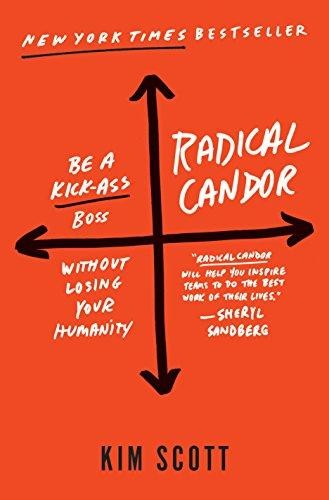
How does Good Authority relate to Radical Candor?
Both books address the challenge of honest feedback in management, and both argue against the false kindness of avoidance. Radical Candor covers more ground — team dynamics, hiring, firing, culture — and is more widely known. Good Authority is more focused on the specific mechanics of accountability conversations and the developmental framing of the manager's role.