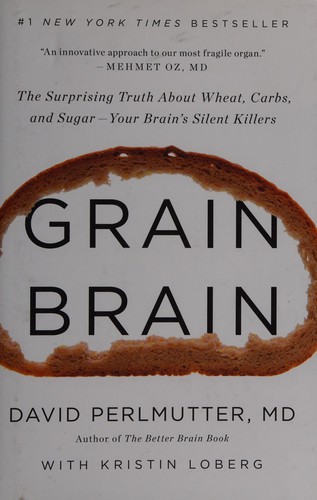
Talk to Grain Brain like its author wrote you back.
Get the ideas that fit your life — not generic summaries.
- Chat with the book
- Audiobook-style main ideas
- Adapts to your life and goals
- Helps you take action
Grain Brain, in detail
David Perlmutter, a board-certified neurologist, argues in Grain Brain that modern carbohydrate consumption — and gluten in particular — is the leading driver of brain disease in the developed world. His central claim is that the brain is highly vulnerable to inflammation, and that dietary carbohydrates, even those from whole grains, spike blood sugar and trigger inflammatory cascades that damage neural tissue over decades. The result, Perlmutter argues, is an epidemic of dementia, depression, ADHD, anxiety, and epilepsy whose dietary roots go largely unaddressed by conventional medicine.
The book's core argument rests on three pillars. First, the brain runs better on fat than on glucose, and chronic high-carbohydrate intake impairs this function. Second, gluten — even in people without diagnosed celiac disease — can trigger an immune response that affects the blood-brain barrier and creates neurological inflammation. Third, elevated blood sugar, even in the non-diabetic range, is strongly correlated with cognitive decline and brain atrophy. Perlmutter draws on population studies, biomarker research, and his own clinical experience to build this case.
Perlmutter recommends a high-fat, low-carbohydrate diet with total carbohydrate intake of 60 grams per day or less. He emphasizes olive oil, nuts, avocado, pastured eggs, grass-fed meat, and most vegetables while eliminating bread, pasta, most fruit, potatoes, and virtually all grains. The protocol resembles a ketogenic or modified Atkins approach applied specifically to brain protection. He also emphasizes physical exercise, sleep, and certain supplements as supporting interventions.
The book received substantial criticism from mainstream nutritionists and neurologists who argued that Perlmutter overstated the evidence for non-celiac gluten sensitivity and drew causal conclusions from correlational data. The strongest parts of Grain Brain are its coverage of the blood sugar-brain connection, which has since accumulated more supporting evidence, and its challenge to the conventional wisdom that low-fat, high-carbohydrate diets are universally optimal.
The big ideas
- 1.
The brain is highly vulnerable to inflammation, and dietary carbohydrates — including whole grains — can trigger inflammatory responses that damage neural tissue over time.
- 2.
Elevated blood sugar, even within what is considered a normal range, correlates strongly with cognitive decline and measurable brain atrophy.
- 3.
Gluten can trigger immune responses in people without diagnosed celiac disease, and Perlmutter argues these responses may affect neurological function.
