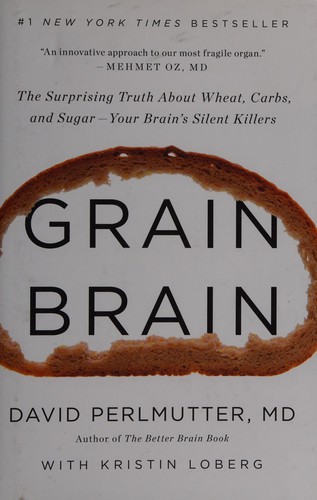
Grain Brain by David Perlmutter is a 2013 health book about gluten, brain health, inflammation. The brain is highly vulnerable to inflammation, and dietary carbohydrates — including whole grains — can trigger inflammatory responses that damage neural tissue over time.
Summary
David Perlmutter, a board-certified neurologist, argues in Grain Brain that modern carbohydrate consumption — and gluten in particular — is the leading driver of brain disease in the developed world. His central claim is that the brain is highly vulnerable to inflammation, and that dietary carbohydrates, even those from whole grains, spike blood sugar and trigger inflammatory cascades that damage neural tissue over decades. The result, Perlmutter argues, is an epidemic of dementia, depression, ADHD, anxiety, and epilepsy whose dietary roots go largely unaddressed by conventional medicine.
The book's core argument rests on three pillars. First, the brain runs better on fat than on glucose, and chronic high-carbohydrate intake impairs this function. Second, gluten — even in people without diagnosed celiac disease — can trigger an immune response that affects the blood-brain barrier and creates neurological inflammation. Third, elevated blood sugar, even in the non-diabetic range, is strongly correlated with cognitive decline and brain atrophy. Perlmutter draws on population studies, biomarker research, and his own clinical experience to build this case.
Perlmutter recommends a high-fat, low-carbohydrate diet with total carbohydrate intake of 60 grams per day or less. He emphasizes olive oil, nuts, avocado, pastured eggs, grass-fed meat, and most vegetables while eliminating bread, pasta, most fruit, potatoes, and virtually all grains. The protocol resembles a ketogenic or modified Atkins approach applied specifically to brain protection. He also emphasizes physical exercise, sleep, and certain supplements as supporting interventions.
The book received substantial criticism from mainstream nutritionists and neurologists who argued that Perlmutter overstated the evidence for non-celiac gluten sensitivity and drew causal conclusions from correlational data. The strongest parts of Grain Brain are its coverage of the blood sugar-brain connection, which has since accumulated more supporting evidence, and its challenge to the conventional wisdom that low-fat, high-carbohydrate diets are universally optimal.
Talk to Grain Brain like its author wrote you back.
Get the ideas that fit your life — not generic summaries.
- Chat with the book
- Audiobook-style main ideas
- Adapts to your life and goals
- Helps you take action
Key takeaways
- 1.
The brain is highly vulnerable to inflammation, and dietary carbohydrates — including whole grains — can trigger inflammatory responses that damage neural tissue over time.
- 2.
Elevated blood sugar, even within what is considered a normal range, correlates strongly with cognitive decline and measurable brain atrophy.
- 3.
Gluten can trigger immune responses in people without diagnosed celiac disease, and Perlmutter argues these responses may affect neurological function.
- 4.
The brain prefers fat as fuel, and a high-fat, low-carbohydrate diet may better support long-term brain health than a conventional low-fat diet.
- 5.
Many common neurological and psychiatric conditions — including depression, ADHD, and dementia — may have dietary and inflammatory components that go largely untreated.
- 6.
Physical exercise is one of the most powerful interventions for brain health, stimulating BDNF, a protein that supports neuron growth and survival.
- 7.
Modern wheat has been bred for higher yield and higher gluten content, which Perlmutter argues is one reason gluten-related complaints have increased.
- 8.
Conventional medicine's focus on managing neurological symptoms rather than preventing them through lifestyle leaves a large preventive opportunity on the table.
Discussion questions
Use these on your own, with a book club, or as chat starters in Superbook. Book club version, ready to copy or print →
- 1.
Perlmutter argues that much of the dementia epidemic is preventable through diet. How credible do you find this claim, and what would it take to persuade you?
- 2.
The book implicates whole grains — long considered a health food — as a driver of brain disease. How do you update your beliefs when expert consensus gets challenged this directly?
- 3.
Have you noticed any connection between what you eat and how clearly you think or how stable your mood is? What was the context?
- 4.
Perlmutter distinguishes between non-celiac gluten sensitivity and celiac disease. Does the former feel like a real clinical entity to you, or a trend diagnosis?
- 5.
If a 60-gram daily carbohydrate limit would protect your brain in the long run, would you do it? What would be hardest to give up?
- 6.
The blood sugar-cognition link is probably the best-supported part of the book. How much of the broader argument rides on that specific connection?
- 7.
Perlmutter is a credentialed neurologist making heterodox dietary claims. Does that combination make you more or less skeptical than if the same argument came from an alternative health practitioner?
- 8.
The book argues conventional medicine consistently misses dietary causes of neurological disease. Do you think that's a systemic failure, a function of evidence standards, or something else?
- 9.
Perlmutter recommends a diet similar to what became keto and paleo trends. Does the overlap with fad diets affect how seriously you take his neurological argument?
- 10.
What would you want to see in a clinical trial that would either confirm or refute Perlmutter's main thesis?
- 11.
If dietary choices made in your thirties significantly shaped your brain health at seventy, how would that change the trade-offs you make today?
Themes
Frequently asked questions
-
Is Grain Brain worth reading?
Worth reading if you're interested in the dietary factors behind brain health, with the caveat that some claims are stronger than others. The blood sugar-cognition connection is well-supported; the broader gluten-causes-brain-disease thesis is more contested. Read it critically alongside mainstream nutritional guidance.
-
What does Grain Brain say you should eat?
High-fat foods — olive oil, nuts, avocado, pastured eggs, grass-fed meat, fatty fish — with most non-starchy vegetables. Total carbohydrates are capped around 60 grams per day. Grains, bread, pasta, most fruit, potatoes, and sweeteners are eliminated.
-
How long does it take to read Grain Brain?
About five to six hours for the 300-page main text. The book has a detailed appendix with meal plans and supplement protocols that adds reading time if you're planning to follow the program.
-
Who should read Grain Brain?
Anyone with a family history of dementia, depression, or metabolic disease who wants to understand the dietary risk factors. Also useful for people who have tried low-fat diets without success or who have ongoing neurological symptoms without clear diagnosis.
-
Is non-celiac gluten sensitivity real?
The medical community is divided. There is now reasonable evidence for a condition distinct from celiac disease in which some people experience symptoms from gluten, but the prevalence and mechanisms remain debated. Perlmutter extends this to neurological symptoms, which is the more speculative part of the argument.