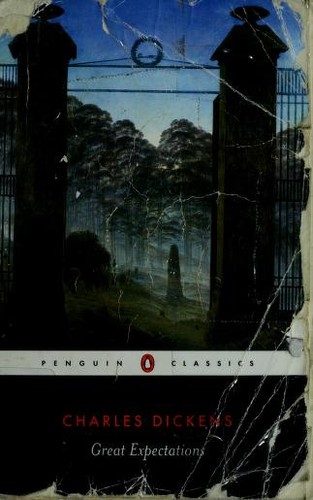
Talk to Great Expectations like its author wrote you back.
Get the ideas that fit your life — not generic summaries.
- Chat with the book
- Audiobook-style main ideas
- Adapts to your life and goals
- Helps you take action
What it argues
Great Expectations follows Pip, an orphan boy on the Kent marshes who is yanked from modest obscurity into the orbit of wealth and social aspiration when an anonymous benefactor funds his move to London. The novel's engine is Pip's hunger to become a gentleman — not because gentlemanliness offers anything concrete, but because it would make him worthy of Estella, a beautiful, cold young woman raised by the reclusive Miss Havisham to break men's hearts.
The book is a sustained examination of how shame warps character. Pip is ashamed of Joe, his blacksmith brother-in-law and the novel's moral center, because Joe's calloused hands and plain speech don't fit Pip's fantasy of himself. Dickens traces how upward mobility without character is just a change of costume — Pip becomes vain, spends recklessly, and treats the people who actually love him with condescension. The novel's reckoning arrives when Pip discovers the true source of his fortune, and the revelation demolishes everything he thought he knew about respectability.
What it gets right
- 1.
Social ambition without self-knowledge is a trap. Pip spends years becoming someone he isn't for reasons he can't honestly name.
- 2.
Joe Gargery is the novel's conscience — his loyalty to Pip is unconditional and unearned, which makes Pip's condescension toward him the most damning judgment Dickens renders.
- 3.
Miss Havisham's cruelty is not personal — it's a lesson in how unprocessed grief can become a worldview, and how that worldview gets transmitted to children.
What it covers
Who wrote it
Charles Dickens (1812–1870) was an English novelist whose serialized fiction shaped the Victorian era's understanding of itself. Born into poverty and forced to work in a blacking factory as a boy after his father was imprisoned for debt, Dickens drew on that experience throughout his career. His major novels — including Oliver Twist, Bleak House, David Copperfield, and A Tale of Two Cities — combine satirical social observation with melodrama and sentiment in a way that made him the most popular writer of his day. He remains among the most widely read novelists in the English language.
