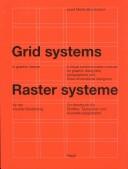
Talk to Grid Systems in Graphic Design like its author wrote you back.
Get the ideas that fit your life — not generic summaries.
- Chat with the book
- Audiobook-style main ideas
- Adapts to your life and goals
- Helps you take action
Grid Systems in Graphic Design, in detail
Josef Müller-Brockmann's Grid Systems in Graphic Design, first published in German and English in 1981 by Niggli Verlag, is the closest thing graphic design has to a foundational technical text. It is a manual for constructing typographic grids, written by a practitioner who spent his career in Zurich developing the International Typographic Style — what most people call Swiss design. The book is structured as a visual argument: the prose explains the principles, the diagrams and design examples do the demonstrating.
The central proposition is that the grid is not a constraint but a system of order that enables freedom. Müller-Brockmann argues that the designer's task is to organize information in a way that allows the reader to navigate it efficiently and experience it as coherent. Grids accomplish this by providing a consistent underlying structure that can accommodate variation without producing chaos. He distinguishes between single-column grids, multi-column grids, and modular grids, and works through the arithmetic of each — explaining how to calculate column widths, gutter proportions, baseline grids, and margin relationships from the starting point of a page format and a type size.
The book is deliberately technical. Müller-Brockmann gives worked examples with specific measurements, showing how different grid structures serve different kinds of content: text-heavy editorial layouts, image-dominant exhibition catalogs, mixed typography-and-photography designs. He is equally interested in the three-dimensional problem — how grids extend across the pages of a book or the panels of an exhibition — as in the single-page design problem.
There is a philosophical dimension that runs under the technical one. Müller-Brockmann believed that clear visual organization was an ethical position: the designer who produced clear, honest, well-organized communication was doing better work than one who produced clever or decorative work. This put him at odds with the expressive, personality-driven design movements of the 1950s and 1960s, and it puts the book in tension with contemporary design culture, which tends to value personality and disruption. Grid Systems is essential to know whether you end up agreeing with it or not.
The big ideas
- 1.
The grid is a system of order — it enables variation and hierarchy within a layout without producing visual chaos, precisely because it establishes a consistent underlying structure.
- 2.
Constructing a grid starts with page format and type size, not with aesthetic preference. The measurements of column width, gutter, and margin should follow from those starting conditions.
- 3.
Single-column, multi-column, and modular grids serve different content needs. The choice of grid structure should be driven by the nature and quantity of the content.
