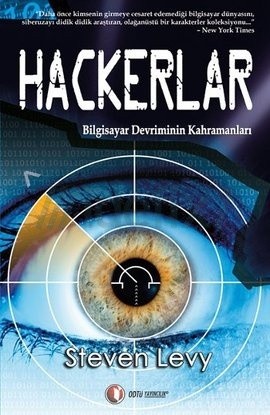
Talk to Hackers: Heroes of the Computer Revolution like its author wrote you back.
Get the ideas that fit your life — not generic summaries.
- Chat with the book
- Audiobook-style main ideas
- Adapts to your life and goals
- Helps you take action
What it argues
Hackers: Heroes of the Computer Revolution is Steven Levy's account of the community of computer enthusiasts who drove the digital revolution from the late 1950s through the early 1980s — the original hackers of MIT's Tech Model Railroad Club and later AI lab, the hardware hackers of the Bay Area Homebrew Computer Club, and the software entrepreneurs who built the early PC industry. The book traces a culture and an ethic rather than a technology chronology.
The term "hacker" in Levy's usage has no criminal connotation. It means a person so passionate about computers that they will explore any system at any depth, finding elegant solutions to technical problems for the intrinsic pleasure of the craft. The hacker ethic, as Levy articulates it, holds that information wants to be free, that access to computers should be universal and total, that you can be judged only by your technical work, and that you can improve any system by taking it apart and rebuilding it better. This ethic, born in the MIT labs of the early 1960s, was countercultural and explicitly utopian.
What it gets right
- 1.
The hacker ethic — commitment to open access, judgment by technical merit, belief that information wants to be free — was formed at MIT in the 1960s and became the cultural foundation of the software industry.
- 2.
The first hackers were not primarily interested in building useful tools. They were interested in the elegance of solutions and the experience of total mastery over a system.
- 3.
Personal computing emerged from hobbyist culture — particularly the Homebrew Computer Club — rather than from corporate R&D, which regarded personal computers as toys.
What it covers
Who wrote it
Steven Levy is an American journalist who has covered technology and culture for Newsweek, Wired, and Rolling Stone. Hackers, published in 1984, is widely considered the definitive history of hacker culture. His other books include Artificial Life, Crypto: How the Code Rebels Beat the Government, The Perfect Thing (on the iPod), In the Plex (on Google), and Facebook: The Inside Story. He has spent four decades covering the technology industry and its cultural implications from a perspective that combines appreciation with critical distance.
