Talk to High Growth Handbook like its author wrote you back.
Get the ideas that fit your life — not generic summaries.
- Chat with the book
- Audiobook-style main ideas
- Adapts to your life and goals
- Helps you take action
High Growth Handbook, in detail
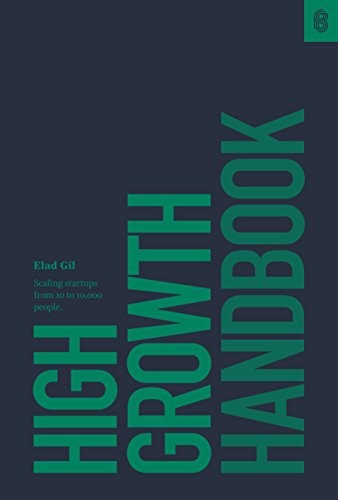
High Growth Handbook is Elad Gil's guide to the operational and organizational challenges that arise once a startup has found product-market fit and needs to scale from dozens of employees to hundreds or thousands. Gil is an investor and former operator who has worked with or backed companies including Airbnb, Stripe, Square, and Coinbase. The book addresses a gap in the startup literature: most startup advice is about getting to traction, but relatively little discusses what breaks immediately afterward and how to fix it.
The book is organized around the specific problems that emerge at scale: when to hire a COO, how the CEO's job changes as the company grows, how to build a board that helps rather than hinders, how to manage the transition from founder-led hiring to systematic recruiting, how to think about M&A as a scaling tool, and how late-stage fundraising works. Each chapter includes a long-form interview with a founder or executive who has navigated that specific problem — Marc Andreessen on boards, Claire Hughes Johnson on scaling operations, Keith Rabois on executive hiring.
What makes the book useful is its specificity. Gil is not writing for people who are still trying to find a business model. He is writing for founders and operators dealing with the concrete institutional problems that arrive between Series A and IPO: the first VP hire who doesn't scale, the executive team that stops communicating directly, the board that becomes a governance problem rather than a resource. The advice is pragmatic and draws on real decisions made at real companies.
The weakness of the book is its format. Like Do More Faster, it's a collection — essays, interviews, and checklists — rather than a sustained argument. The interviews are often the best material, but the editing is uneven and some sections feel more like frameworks for their own sake than accumulated wisdom. High Growth Handbook is most valuable as a reference: the kind of book you pull out when you're about to face a specific situation, not one you read cover to cover looking for insight.
The big ideas
- 1.
The CEO's job changes dramatically at scale. The skills that got a company to product-market fit — high personal involvement, direct problem-solving — actively harm performance in a company of 200 or more people.
- 2.
Boards become liabilities when founders don't manage them. The founders who get the most from their boards treat board management as a recurring priority, not a formality before the quarterly meeting.
- 3.
Hiring a COO too early is as common a mistake as hiring one too late. The right time is when the CEO has a specific set of operational problems they need to hand off, not when the company feels generally chaotic.
