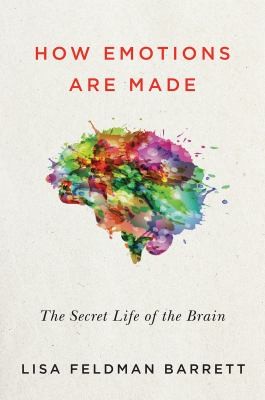
Talk to How Emotions Are Made: The Secret Life of the Brain like its author wrote you back.
Get the ideas that fit your life — not generic summaries.
- Chat with the book
- Audiobook-style main ideas
- Adapts to your life and goals
- Helps you take action
What it argues
Lisa Feldman Barrett is a neuroscientist and psychologist at Northeastern University who has spent thirty years studying emotion, and her conclusion challenges the most widely held view of what emotions are. The classical view — that emotions are universal, hard-wired responses that evolved in ancient brain structures and are triggered by events — is, she argues, empirically wrong. Emotions are not detected in the world; they are constructed by the brain, using prediction and past experience, to make sense of interoceptive signals from the body.
The book's central argument, the theory of constructed emotion, holds that the brain is a prediction machine that constantly generates models of what is causing the signals it receives from the body. When your body is in a state of arousal — elevated heart rate, heightened alertness — the brain interprets that state using concepts learned from culture and experience. The same physical arousal might be constructed as fear, excitement, anger, or anticipation depending on context. Emotions are not readouts of pre-existing states; they are categorizations of bodily states using emotionally labeled concepts that the brain has acquired.
What it gets right
- 1.
Emotions are not universal, hard-wired responses that evolved in specific brain structures. They are constructed by the brain in real time using prediction and culturally acquired emotional concepts.
- 2.
The brain is a prediction machine: it constantly generates models of the causes of its inputs, including interoceptive signals from the body. Emotions are predictions about the meaning of bodily states.
- 3.
The same physical arousal can be constructed as fear, excitement, anger, or anticipation depending on context and concept availability. The body provides the material; the brain provides the meaning.
What it covers
Who wrote it
Lisa Feldman Barrett is University Distinguished Professor of Psychology at Northeastern University, with appointments at Harvard Medical School and Massachusetts General Hospital. She is one of the most highly cited scientists in the world and has received numerous awards including a National Institutes of Health Director's Pioneer Award. Her research focuses on emotion, the brain, and the mind. Beyond How Emotions Are Made, she is the author of Seven and a Half Lessons About the Brain and numerous scientific papers and reviews that have reshaped the scientific understanding of emotion.
