How Emotions Are Made: The Secret Life of the Brain by Lisa Feldman Barrett is a 2017 psychology book about emotions, neuroscience, perception. Emotions are not universal, hard-wired responses that evolved in specific brain structures. They are constructed by the brain in real time using prediction and culturally acquired emotional concepts.
Summary
Lisa Feldman Barrett is a neuroscientist and psychologist at Northeastern University who has spent thirty years studying emotion, and her conclusion challenges the most widely held view of what emotions are. The classical view — that emotions are universal, hard-wired responses that evolved in ancient brain structures and are triggered by events — is, she argues, empirically wrong. Emotions are not detected in the world; they are constructed by the brain, using prediction and past experience, to make sense of interoceptive signals from the body.
The book's central argument, the theory of constructed emotion, holds that the brain is a prediction machine that constantly generates models of what is causing the signals it receives from the body. When your body is in a state of arousal — elevated heart rate, heightened alertness — the brain interprets that state using concepts learned from culture and experience. The same physical arousal might be constructed as fear, excitement, anger, or anticipation depending on context. Emotions are not readouts of pre-existing states; they are categorizations of bodily states using emotionally labeled concepts that the brain has acquired.
Barrett draws substantial consequences from this view. If emotions are constructed using concepts, then emotional granularity — the richness of the emotional vocabulary you have available — predicts how well you can regulate your emotions. People with more differentiated emotional concepts make finer distinctions between similar states and have more options for responding. This has implications for therapy, education, and mental health more broadly.
The book also challenges the triune brain theory — the popular idea that human brains consist of an ancient reptilian core, a limbic system, and a rational cortex — which Barrett argues is a scientifically discredited but culturally persistent myth. The brain is not hierarchically organized with reason controlling primitive emotion from above; it is an interconnected prediction and interoceptive system that does not carve neatly into those components. How Emotions Are Made is a significant scientific argument presented in accessible prose, and it is one of the more important recent contributions to popular neuroscience.
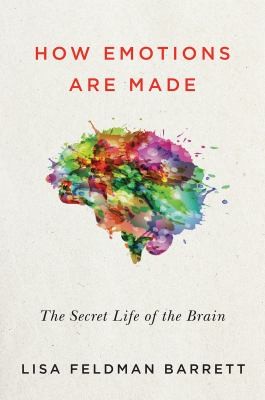
Talk to How Emotions Are Made: The Secret Life of the Brain like its author wrote you back.
Get the ideas that fit your life — not generic summaries.
- Chat with the book
- Audiobook-style main ideas
- Adapts to your life and goals
- Helps you take action
Key takeaways
- 1.
Emotions are not universal, hard-wired responses that evolved in specific brain structures. They are constructed by the brain in real time using prediction and culturally acquired emotional concepts.
- 2.
The brain is a prediction machine: it constantly generates models of the causes of its inputs, including interoceptive signals from the body. Emotions are predictions about the meaning of bodily states.
- 3.
The same physical arousal can be constructed as fear, excitement, anger, or anticipation depending on context and concept availability. The body provides the material; the brain provides the meaning.
- 4.
Emotional granularity matters. Having a richer, more differentiated vocabulary of emotional concepts enables finer discrimination between states and more options for regulation.
- 5.
The triune brain theory — reptilian core, limbic system, cortex — is scientifically wrong. The brain is not organized in evolutionary layers, and the amygdala is not the emotion center the popular account suggests.
- 6.
Cultural and social learning shape the emotional concepts available. Different cultures genuinely experience and express some emotions differently — not just in display but in construction.
- 7.
If you increase someone's emotional vocabulary, you can measurably improve their emotional regulation. Emotion words are not just labels — they are tools for constructing experience.
Discussion questions
Use these on your own, with a book club, or as chat starters in Superbook. Book club version, ready to copy or print →
- 1.
Barrett argues that emotions are not detected but constructed. Does that claim feel right to you based on your own experience of emotional states, or does it feel like philosophical sleight of hand?
- 2.
The same bodily arousal can be constructed as excitement or anxiety. Can you think of a case where reinterpreting the meaning of your arousal changed how you experienced and responded to a situation?
- 3.
Emotional granularity — having a richer emotional vocabulary — is associated with better regulation. How would you describe the richness of your emotional concepts? Are there states you experience but struggle to name?
- 4.
Barrett challenges the triune brain and the amygdala-as-emotion-center narrative. How deeply embedded is that narrative in how you and the people around you talk about emotion?
- 5.
She argues that cultural learning shapes emotional construction. What emotions does your own cultural background make most legible, and which does it make harder to experience or express?
- 6.
The prediction machine model means the brain is always generating models based on past experience. What implications does that have for how early experience shapes emotional life?
- 7.
If emotions are constructed using available concepts, then teaching children richer emotional vocabulary is a form of emotional development. What do you think that would look like in practice?
- 8.
Barrett's view has implications for therapy: changing the concepts available to someone could change how they construct their emotional experience. Does that match your understanding of how therapy works?
- 9.
She discusses how emotions are social phenomena — they are constructed with reference to social context and cultural norms. What emotions do you think are most heavily shaped by your social context?
- 10.
The book challenges several widely held beliefs about emotion. Which of those challenges was most surprising or difficult for you to accept?
- 11.
Barrett argues that there is no universal facial expression of emotion that all cultures share. If true, what does that mean for how we interpret others' emotional states?
Themes
Frequently asked questions
-
What is the theory of constructed emotion?
Barrett's alternative to the classical view of emotion. It holds that emotions are not pre-wired responses that the brain detects and expresses, but are constructions the brain creates in real time by interpreting interoceptive signals using emotionally labeled concepts acquired through culture and experience.
-
What is the triune brain theory?
The popular idea that the human brain consists of three layers corresponding to evolutionary history: a reptilian core (basic drives), a paleomammalian limbic system (emotions), and a neomammalian neocortex (reason). Barrett argues this model is scientifically wrong and that the brain does not work this way.
-
Is Barrett's theory mainstream in neuroscience?
It is influential but contested. The theory of constructed emotion has substantial empirical support and has reshaped how many researchers think about emotion. The classical basic emotions view still has proponents, particularly in evolutionary psychology. The debate is ongoing.
-
What is emotional granularity?
The degree to which someone makes fine-grained distinctions between similar emotional states. High emotional granularity means you distinguish between guilt and shame, between anxiety and dread, between satisfaction and delight. Low emotional granularity means you experience most negative states as just 'bad.' Higher granularity is associated with better regulation.
-
What is the practical upshot of this book?
Learning richer emotional vocabulary is a form of self-development, not just self-expression. Understanding that the same arousal can be constructed differently gives you more agency over emotional experience. And recognizing that emotions are culturally constructed should generate more humility about interpreting others' emotional states.
Similar books

Seven and a Half Lessons About the Brain
Lisa Feldman Barrett
Descartes' Error: Emotion, Reason, and the Human Brain
Antonio Damasio
Incognito: The Secret Lives of the Brain
David Eagleman
Phantoms in the Brain: Probing the Mysteries of the Human Mind
V. S. Ramachandran and Sandra Blakeslee
