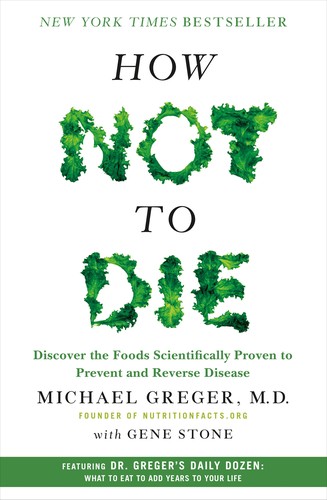
Talk to How Not to Die like its author wrote you back.
Get the ideas that fit your life — not generic summaries.
- Chat with the book
- Audiobook-style main ideas
- Adapts to your life and goals
- Helps you take action
How Not to Die, in detail
How Not to Die is Michael Greger's systematic argument that the fifteen leading causes of death in the United States are largely preventable through diet and lifestyle change. Greger is a physician and founder of NutritionFacts.org, and the book reads like the output of someone who has spent decades cataloguing nutritional research: each chapter covers a major disease, reviews the relevant science, and builds toward a dietary prescription. The tone is urgent and the conclusion is consistent — a whole-food, plant-based diet is the single most powerful intervention available for most chronic diseases.
The first half of the book moves through the fifteen killers one by one. Heart disease, cancer, diabetes, kidney disease, infections, brain disease — each gets a chapter that combines readable summaries of the research with specific foods and habits that the evidence links to risk reduction or increase. The chapters on heart disease and cancer are the most detailed, drawing on decades of epidemiological data and some intervention trials. Greger consistently highlights studies showing that populations eating predominantly plant-based diets have dramatically lower rates of the conditions that dominate Western medicine.
The second half introduces Greger's "Daily Dozen" — a checklist of food groups he recommends eating every day, including legumes, berries, cruciferous vegetables, whole grains, and flaxseeds. The logic here is less "eliminate everything bad" and more "crowd out the bad with the good." The Daily Dozen functions as a practical scaffold for people who accept the evidence but need structure.
The book is not without critics. Some researchers find Greger's reading of the evidence selective — he cites studies that support whole-food plant-based diets comprehensively and handles contradictory evidence lightly. The enthusiasm is infectious but occasionally outruns the data. That said, the core argument — that Western dietary patterns drive chronic disease and that moving toward more plants reduces risk — is not seriously contested in mainstream epidemiology. Readers who want nuance about what kind of animal products matter, or whether well-sourced fish or dairy has any redeeming role, will find the book less useful than those open to a more absolute prescription.
The big ideas
- 1.
The fifteen leading causes of premature death in the United States are largely diet-related and largely preventable through whole-food, plant-based eating.
- 2.
Heart disease has been shown to be not only preventable but reversible in some patients through dietary intervention — evidence that does not exist for most pharmaceutical treatments.
- 3.
Colorectal cancer risk is strongly linked to red and processed meat consumption; the evidence here is among the strongest in nutritional epidemiology.
