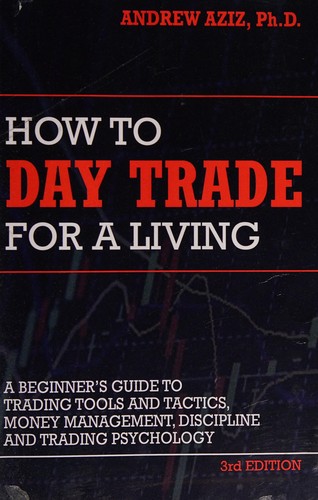
Talk to How to Day Trade for a Living like its author wrote you back.
Get the ideas that fit your life — not generic summaries.
- Chat with the book
- Audiobook-style main ideas
- Adapts to your life and goals
- Helps you take action
How to Day Trade for a Living, in detail
How to Day Trade for a Living is Andrew Aziz's introduction to active stock trading for people who want to treat it as a craft rather than a gamble. Aziz worked as a chemical engineer before becoming a full-time trader, and the book reflects that background: it is systematic and procedure-oriented rather than motivational. The central premise is that retail traders can compete profitably in short-term equity markets if they develop a strict set of rules, limit themselves to a handful of proven setups, and manage risk with precision.
The bulk of the book walks through the practical mechanics: how to choose a broker and set up a direct-access trading platform, how to read Level 2 quotes and time-and-sales data, and how to use technical indicators like moving averages, VWAP, and relative strength to identify entries and exits. Aziz identifies specific chart patterns — the opening range breakout, the ABCD pattern, the bull flag — and explains what each one signals and how to trade it consistently. He is explicit that learning these patterns is not enough; discipline in execution is what separates traders who survive from those who blow up their accounts.
Risk management gets more attention than most trading books give it. Aziz argues that the first job of a day trader is not to make money but to protect capital. He describes sizing positions relative to account equity, setting hard stop-losses before entering any trade, and keeping a trading journal to identify patterns in both wins and losses. The concept of risk-to-reward ratio is threaded through every strategy: never take a trade where the potential gain does not meaningfully outweigh the potential loss.
The honest limitation of the book is that day trading is genuinely difficult and the failure rate among retail traders is high. Aziz does not hide this. He recommends starting with a simulator, paper-trading for months before risking real money, and being prepared for a long learning curve. The book is most useful as an orientation to the vocabulary, tools, and discipline of short-term trading — not a guarantee of results, but a serious map of the terrain.
The big ideas
- 1.
Day trading requires strict rules and predefined setups. Improvising in real-time leads to emotional decisions and losses.
- 2.
The primary job of a new trader is to protect capital, not to make money. Losses compound just as gains do.
- 3.
VWAP — the volume-weighted average price — is one of the most reliable intraday reference points for identifying support, resistance, and trend direction.
