Talk to How to Make Money in Stocks like its author wrote you back.
Get the ideas that fit your life — not generic summaries.
- Chat with the book
- Audiobook-style main ideas
- Adapts to your life and goals
- Helps you take action
What it argues
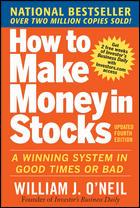
William O'Neil's How to Make Money in Stocks is the manual behind CAN SLIM, a growth-stock selection and timing system O'Neil developed by studying every major market winner in the United States from 1880 onward. O'Neil founded Investor's Business Daily as a newspaper to support investors using this approach, and this book is his most comprehensive explanation of how it works. Now in its fourth edition, it remains one of the most widely read books on growth investing and stock market timing.
CAN SLIM is an acronym for seven criteria: Current quarterly earnings, Annual earnings growth, New products or management, Supply and demand for shares, Leader or laggard among peers, Institutional sponsorship, and Market direction. Each letter gets a chapter. The thesis is that stocks with the highest probability of major price moves share identifiable characteristics at the time of their breakout. O'Neil backs this with exhaustive research showing that most of history's best-performing stocks — from early Apple to Cisco to Google — showed the CAN SLIM pattern before their biggest runs.
What it gets right
- 1.
CAN SLIM identifies seven shared characteristics among the biggest stock market winners before their largest price moves. History consistently validates the pattern.
- 2.
Selling any stock that falls 7–8% from your buy point, without exception, is the single most important rule in the system. Small losses are manageable; large losses are not.
- 3.
Volume confirms price. A stock breaking out on high volume is signaling institutional buying. A breakout on low volume is suspect.
What it covers
Who wrote it
William J. O'Neil is an American stock broker, entrepreneur, and financial writer who founded Investor's Business Daily in 1984 as an alternative to the Wall Street Journal. He developed the CAN SLIM investment system after extensive research into the characteristics of the greatest stock market winners in American history. He founded the institutional stock research firm William O'Neil + Co., which serves major investment managers worldwide. O'Neil bought his seat on the New York Stock Exchange at age 30, one of the youngest people ever to do so at that time.
