Talk to Hyperion like its author wrote you back.
Get the ideas that fit your life — not generic summaries.
- Chat with the book
- Audiobook-style main ideas
- Adapts to your life and goals
- Helps you take action
Hyperion, in detail
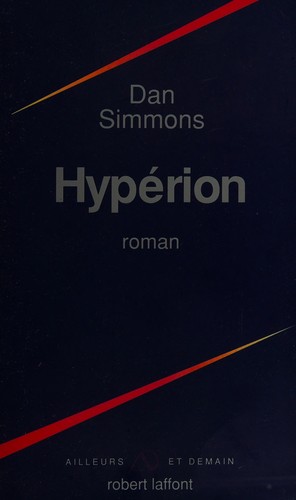
Seven pilgrims travel to the dying world of Hyperion, each knowing the journey is likely a one-way trip. Their destination is the Time Tombs, ancient structures moving backward through time, and the Shrike — an unknowable, blade-covered being of terrifying power that waits there. As war closes in and the last pilgrim ship departs, the group agrees to share their stories on the way. The structure is Canterbury Tales in deep space: each pilgrim's tale is told in a different genre, a different voice, a different key.
What the book is really doing is asking what people carry with them when they face annihilation — and whether meaning can survive a universe that has long since outgrown human-scale concerns. The Consul carries colonial guilt and a devastating personal loss. Father Hoyt carries his tortured relationship with a faith that both destroys and resurrects him. The poet Martin Silenus carries artistic ambition that has warped into something monstrous. Each story lands differently; a few are among the finest short fiction in the genre.
Simmons spent years building this universe, and it shows. The Hegemony of Man, the TechnoCore, the Ousters, the datasphere — the world-building is extraordinarily dense without becoming an encyclopedia. The prose is ambitious: Simmons writes pastiche deliberately, cycling through Raymond Chandler hardboiled, Keatsian epic poetry, domestic horror, and military SF. The Shrike is one of the genre's great monsters precisely because it is never explained.
Hyperion ends without resolution — it is the first half of a two-part story continued in The Fall of Hyperion. Readers who bounce off the book usually do so in the first hundred pages, or because the Canterbury structure means the main plot barely advances. Those who stay find one of the most ambitious science fiction novels of the last fifty years. Come for the world-building, stay for the Consul's tale.
The big ideas
- 1.
The Canterbury structure means the book is actually six distinct stories in six registers — if one doesn't work for you, the next one might; the Priest's and Consul's tales are the emotional anchors.
- 2.
The Shrike functions like the best monsters do: as a mirror. Each character's relationship to it reflects what they fear most about mortality, time, and meaning.
- 3.
Simmons buries Keats throughout the novel — Hyperion is explicitly a meditation on unfinished work, the fragmentary nature of great ambition, and what artists leave behind.
