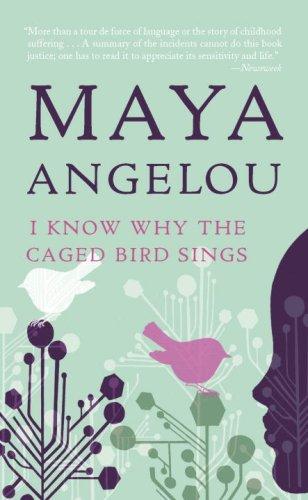
Talk to I Know Why the Caged Bird Sings like its author wrote you back.
Get the ideas that fit your life — not generic summaries.
- Chat with the book
- Audiobook-style main ideas
- Adapts to your life and goals
- Helps you take action
I Know Why the Caged Bird Sings, in detail
Maya Angelou's first volume of autobiography covers her childhood and adolescence in Stamps, Arkansas and San Francisco during the 1930s and 1940s, ending with the birth of her son at age sixteen. It is one of the defining American memoirs, both for the directness with which it confronts racism, sexual violence, and displacement, and for the richness of its prose — Angelou writes about her childhood with a lyrical attention that transforms painful material into something generous and lasting.
The early sections establish the texture of Black life in the segregated South. Angelou and her brother Bailey are raised largely by their grandmother, whom they call Momma, who owns a general store and maintains a rigid dignity under the daily humiliations of Jim Crow. The children are also sent to live periods with their mother in St. Louis, where, at age eight, Angelou is raped by her mother's boyfriend. After she names her attacker and he is killed, she stops speaking for nearly five years, believing her words have the power to cause death.
The muteness ends when a neighbor, Mrs. Bertha Flowers, introduces Angelou to literature and teaches her that language can be both safe and transformative. This encounter with books — with Dickens, Poe, Shakespeare, and the Black writers her grandmother considered equally dangerous — is central to the book's argument about what reading can do. Angelou's love of language is not incidental to her survival; it is the mechanism of it.
The second half follows the family to California during the Second World War and covers Angelou's adolescence in San Francisco, including a period of homelessness, a summer living in a junkyard commune of runaway teenagers, and her determination to become the city's first Black streetcar conductor. The book ends not with resolution but with beginning: she is sixteen, has just given birth, and is, as she understands it, finally becoming herself.
The big ideas
- 1.
Language is survival. Angelou's five years of silence after her rape are broken not by therapy but by literature, and the book argues that access to language is access to selfhood.
- 2.
Racism operates through accumulation. The book records not one dramatic injustice but a constant background of small degradations — the white dentist who won't treat Black patients, the graduation speaker who treats Black students as an afterthought — that shape a childhood.
- 3.
Dignity can be maintained under oppression without requiring that the oppression be denied. Momma's survival strategies are neither accommodation nor naivete; they are hard-won wisdom.
