Talk to I Will Teach You to Be Rich like its author wrote you back.
Get the ideas that fit your life — not generic summaries.
- Chat with the book
- Audiobook-style main ideas
- Adapts to your life and goals
- Helps you take action
I Will Teach You to Be Rich, in detail
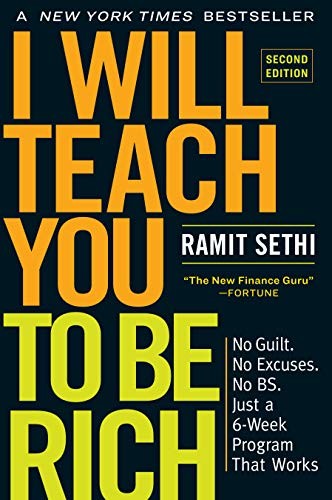
I Will Teach You to Be Rich is Ramit Sethi's six-week program for getting your basic financial infrastructure in order — automating savings, optimizing credit, setting up the right accounts, and beginning to invest — written specifically for people in their twenties and thirties who haven't yet dealt with any of this. First published in 2009, with a revised edition in 2019, the book is notable for its refusal to moralize about spending and its focus on systems over willpower.
Sethi's core argument is that personal finance should be automated so that doing the right thing happens without conscious effort. Set up automatic transfers to retirement accounts, savings, and investments on payday, before you can spend the money. Pay your bills automatically. The system runs in the background while you spend freely on things you actually care about — what Sethi calls "conscious spending." The goal is not to budget every category but to make the important financial moves happen automatically and then give yourself permission to enjoy whatever remains.
The book covers credit cards and credit scores in detail and, unusually for personal finance books, is enthusiastic about credit cards used well. Sethi argues that the right credit cards, paid in full each month, provide meaningful rewards and build credit scores without any downside for disciplined users. He provides scripts for negotiating fees and interest rates, which readers consistently report actually working. This pro-credit-card stance distinguishes the book from Ramsey's approach and reflects Sethi's view that personal finance problems are behavioral, not product-related.
The investment section recommends low-cost target-date funds for people who want a hands-off approach and a simple three-fund portfolio for those willing to do minimal ongoing maintenance. Sethi is a consistent advocate for index funds and for starting to invest early rather than waiting until you have figured out the perfect approach. The book's tone is direct and occasionally irreverent — Sethi spends time attacking the financial advice industry and framing automation as a better approach than the discipline most personal finance books demand. The 2019 revision updates the specific numbers and product recommendations for a higher-cost environment.
The big ideas
- 1.
Automate your finances so that saving and investing happen without relying on willpower. Set up automatic transfers on payday, before the money hits your checking account.
- 2.
The 'conscious spending plan' gives you permission to spend on what you love, as long as the automated savings and investments are happening first.
- 3.
Credit cards, used well, are financial tools with real benefits. Pay in full every month, earn rewards, build credit — the risk is for people who carry balances, not for disciplined users.
