Talk to Ikigai like its author wrote you back.
Get the ideas that fit your life — not generic summaries.
- Chat with the book
- Audiobook-style main ideas
- Adapts to your life and goals
- Helps you take action
Ikigai, in detail
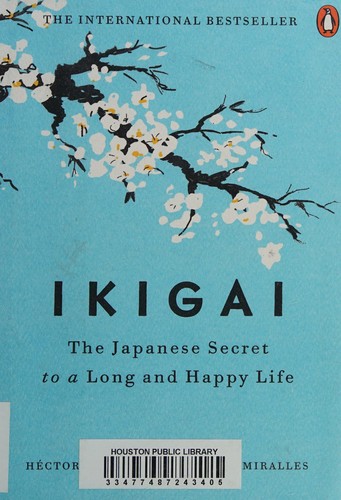
Ikigai is a short, accessible book by Héctor García and Francesc Miralles that explores the Japanese concept of a reason for being — the intersection of what you love, what you are good at, what the world needs, and what you can be paid for. García, a Spanish author based in Japan, draws on interviews with elderly residents of Okinawa, a region with one of the highest concentrations of centenarians in the world, to illustrate what living with ikigai looks like in practice.
The book moves through several related ideas: the role of purpose in longevity, the Okinawan diet and lifestyle, the psychology of flow states, the benefits of gentle daily movement (the Okinawan practice of radio taiso, walking, and gardening), and the value of maintaining social connections well into old age. The authors present ikigai not as a grand calling but as something smaller and more durable — a reason to get out of bed each morning that doesn't depend on external achievement or recognition.
García and Miralles draw on the work of Mihaly Csikszentmihalyi on flow, Viktor Frankl on meaning, and Japanese philosophy and practice. The combination is readable and warmly written. The book doesn't make ambitious claims or challenge established ideas; it synthesizes evidence and cultural observation into a simple framework for thinking about how to orient a life.
The limitations are real. Ikigai is light on depth. Much of what it covers — flow, social connection, diet, movement, purpose — is discussed more rigorously elsewhere. Readers looking for a scientific treatment of longevity will find it thin; readers looking for a gentle philosophical reframe of what makes life worth living will find it useful and pleasant. It is most effective read slowly rather than mined for tactics.
The big ideas
- 1.
Ikigai is the Japanese concept of a reason for being — the overlap of what you love, what you're good at, what the world needs, and what you can be paid for.
- 2.
The residents of Okinawa, many of whom live past 100, typically have a strong sense of ikigai, close social networks, and low stress. None of them describe having retired from life.
- 3.
Flow states — periods of total absorption in challenging work — are closely related to ikigai. Both require matching skill to difficulty and finding the work intrinsically rewarding.
