Talk to Into the Wild like its author wrote you back.
Get the ideas that fit your life — not generic summaries.
- Chat with the book
- Audiobook-style main ideas
- Adapts to your life and goals
- Helps you take action
What it argues
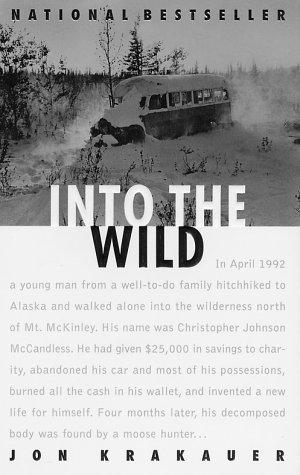
Into the Wild is Jon Krakauer's account of Christopher McCandless, a twenty-four-year-old who graduated from Emory University in 1990, gave his savings to charity, abandoned his car and possessions, and spent two years drifting through the American West before hitchhiking into the Alaskan wilderness in April 1992. Four months later his body was found in an abandoned bus near the Stampede Trail. Krakauer reconstructs the journey from journals, photographs, and interviews with the people McCandless encountered along the way.
What makes the book worth reading is the tension between the two most obvious interpretations of McCandless. One reading is that he was reckless — ill-prepared, naively romantic about nature, and ultimately the author of his own death. The other is that he was doing something most people only fantasize about: walking away from a comfortable life because it felt hollow, testing himself against something real. Krakauer does not resolve this tension cleanly, and the book is better for it. He draws on his own early mountaineering recklessness to argue that McCandless was not crazy, just young and absolutist in ways that men in particular sometimes are.
What it gets right
- 1.
Christopher McCandless walked away from a comfortable, conventional life not out of mental illness but out of a principled, if extreme, rejection of what that life represented to him.
- 2.
Krakauer argues that the impulse to test oneself against wilderness is a recurring feature of American (and especially male) idealism, from Thoreau to McCandless — not an aberration.
- 3.
Inadequate preparation was fatal. McCandless had skills and real outdoors experience, but he underestimated the severity and isolation of the Alaskan interior, where errors have no margin.
What it covers
Who wrote it
Jon Krakauer is an American journalist and mountaineer best known for his narrative nonfiction about extreme environments and human limits. Into Thin Air, his account of the 1996 Everest disaster in which he participated, became one of the best-selling nonfiction books of the decade. His other books include Under the Banner of Heaven and Missoula. Before writing full-time, he worked as a carpenter and competed as a serious amateur climber. His writing combines rigorous reporting with first-person credibility: he does not cover wilderness stories from the outside.
