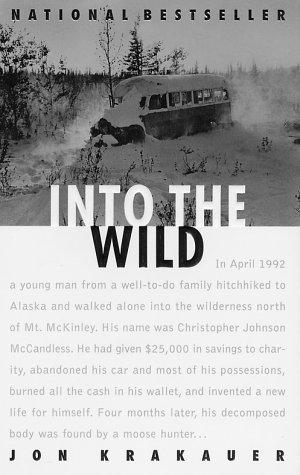
Into the Wild by Jon Krakauer is a 1996 biography book about wilderness, idealism, freedom. Christopher McCandless walked away from a comfortable, conventional life not out of mental illness but out of a principled, if extreme, rejection of what that life represented to him.
Summary
Into the Wild is Jon Krakauer's account of Christopher McCandless, a twenty-four-year-old who graduated from Emory University in 1990, gave his savings to charity, abandoned his car and possessions, and spent two years drifting through the American West before hitchhiking into the Alaskan wilderness in April 1992. Four months later his body was found in an abandoned bus near the Stampede Trail. Krakauer reconstructs the journey from journals, photographs, and interviews with the people McCandless encountered along the way.
What makes the book worth reading is the tension between the two most obvious interpretations of McCandless. One reading is that he was reckless — ill-prepared, naively romantic about nature, and ultimately the author of his own death. The other is that he was doing something most people only fantasize about: walking away from a comfortable life because it felt hollow, testing himself against something real. Krakauer does not resolve this tension cleanly, and the book is better for it. He draws on his own early mountaineering recklessness to argue that McCandless was not crazy, just young and absolutist in ways that men in particular sometimes are.
The book is as much a portrait of American idealism as it is a story about one person. Krakauer places McCandless in a lineage of figures who rejected civilization for wilderness — Thoreau, Tolstoy, John Muir — and examines why that impulse recurs across generations. He also looks hard at McCandless's family, especially the fractured relationship with his father, and suggests that the flight from society was partly a flight from something closer to home. The Alaskan landscape itself is rendered without romanticism: beautiful, indifferent, and unforgiving of mistakes that would be survivable anywhere else.
The weaknesses of the book are worth noting. Krakauer's identification with McCandless sometimes tips into advocacy, and critics who find McCandless entitled or self-destructive will not find the book fully engages their objection. The cause of death — whether it was a plant toxin, starvation, or a combination — was debated for years after publication. But as a piece of narrative journalism, the book is tightly constructed and genuinely hard to put down. It raises questions about risk, meaning, and what it means to live deliberately that stay with the reader after the story ends.
Talk to Into the Wild like its author wrote you back.
Get the ideas that fit your life — not generic summaries.
- Chat with the book
- Audiobook-style main ideas
- Adapts to your life and goals
- Helps you take action
Key takeaways
- 1.
Christopher McCandless walked away from a comfortable, conventional life not out of mental illness but out of a principled, if extreme, rejection of what that life represented to him.
- 2.
Krakauer argues that the impulse to test oneself against wilderness is a recurring feature of American (and especially male) idealism, from Thoreau to McCandless — not an aberration.
- 3.
Inadequate preparation was fatal. McCandless had skills and real outdoors experience, but he underestimated the severity and isolation of the Alaskan interior, where errors have no margin.
- 4.
The book does not settle whether McCandless was brave or foolish. It presents evidence for both and asks the reader to sit with the ambiguity.
- 5.
McCandless's fraught relationship with his father — who had lived a double life — shaped his need to escape and reinvent himself far more than his ideology of wilderness did.
- 6.
Krakauer's own near-death on the Devil's Thumb is woven into the narrative as evidence that the drive to court risk is recognizable, not pathological.
- 7.
The Alaskan wilderness is portrayed as genuinely indifferent. The land did not punish McCandless; it simply did not accommodate his mistakes.
- 8.
The book is partly a critique of how Americans mythologize the wild: the frontier is not a sanctuary from the complications of society, and treating it as one can get you killed.
Discussion questions
Use these on your own, with a book club, or as chat starters in Superbook. Book club version, ready to copy or print →
- 1.
Krakauer clearly sympathizes with McCandless. Does his sympathy feel earned to you, or does it shade into excuse-making? Where does your reading land?
- 2.
McCandless gave away his savings and burned his cash before heading into the wilderness. What does that gesture mean to you — liberation, recklessness, performance, or something else?
- 3.
The book places McCandless in a tradition of American wilderness seekers — Thoreau, Muir, Everett Ruess. Does that lineage make his choices feel more understandable, or does it romanticize something that shouldn't be?
- 4.
Krakauer suggests the father-son conflict was central to McCandless's rejection of conventional life. How much weight should we give that explanation versus McCandless's stated ideals?
- 5.
Several people who met McCandless on the road tried to dissuade him from Alaska or offered him alternatives. What does it tell us about him that he listened, thanked them, and went anyway?
- 6.
The cause of McCandless's death was disputed for years — plant toxin, starvation, a combination. Does it matter how he died, or is the cause beside the point?
- 7.
Krakauer inserts his own story of reckless climbing in his twenties as a parallel. Does that parallel make you more or less sympathetic to McCandless, and what does it say about how we judge risk-taking with age?
- 8.
McCandless left a message in his final days: 'Happiness only real when shared.' What do you make of that inscription — a deathbed conversion, a recognition he'd already arrived at, or something else?
- 9.
Into the Wild is a book about a young man who rejected material comfort and died. What would the equivalent story look like for someone in your own generation or context?
- 10.
The people who knew McCandless on the road — Wayne Westerberg, Jan Burres, Ron Franz — were genuinely moved by him. What quality in McCandless do you think drew people to him?
- 11.
Where is the line between principled simplicity and dangerous naivety? Does McCandless cross it in your reading, and at what point?
- 12.
Ron Franz, the elderly man who offered to adopt McCandless, was devastated by his death and reportedly gave up his faith. What does that relationship reveal about what McCandless offered to others?
Themes
Frequently asked questions
-
Is Into the Wild worth reading?
Yes, if you're willing to engage with a subject who is easy to either mythologize or dismiss. The book's strength is that it takes McCandless seriously without beatifying him. Krakauer is a skilled narrative journalist and the story moves fast. Readers who come to it expecting a simple cautionary tale or a hero story will find something more complicated.
-
How long does it take to read Into the Wild?
Roughly four to five hours at average reading pace for the 224-page book. The chapters are short and the writing pulls you forward. Most readers finish it in one or two sittings.
-
What is Into the Wild actually about?
On the surface it's about Christopher McCandless, a young man who walked into the Alaskan wilderness in 1992 and died there. Underneath it's about idealism, the mythology of the American frontier, what drives people to abandon comfortable lives, and whether McCandless's death was a tragedy, a choice, or both.
-
Who should read Into the Wild?
Anyone who has ever felt the pull to walk away from their life, or who has known someone like that. It works equally well as adventure journalism, as biography, and as a meditation on why the wilderness still carries so much symbolic weight in American culture.
-
Did Krakauer figure out how McCandless died?
Krakauer's original theory — that McCandless was poisoned by seeds from wild potato plants — was contested for years. He later updated his argument with additional research pointing to a specific alkaloid in the seeds. The exact cause remains debated, but most accounts agree that starvation and inability to cross a swollen river to safety were central factors.
Similar books
Into Thin Air
Jon Krakauer
Wild: From Lost to Found on the Pacific Crest Trail
Cheryl Strayed
Endurance: Shackleton's Incredible Voyage
Alfred Lansing
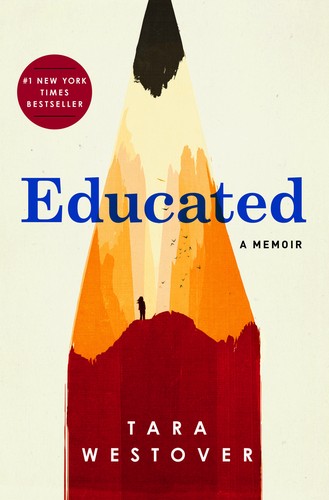
Educated: A Memoir
Tara Westover
