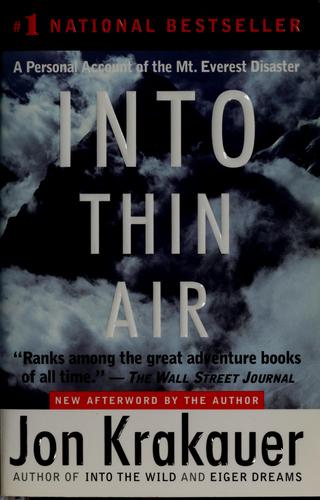
Talk to Into Thin Air like its author wrote you back.
Get the ideas that fit your life — not generic summaries.
- Chat with the book
- Audiobook-style main ideas
- Adapts to your life and goals
- Helps you take action
Into Thin Air, in detail
Into Thin Air is Jon Krakauer's firsthand account of the May 1996 Everest expedition that killed eight climbers in a single afternoon. Krakauer was there as a journalist for Outside magazine and reached the summit on May 10, the same day that two guided groups led by Rob Hall and Scott Fischer were descending into a catastrophic storm. The book is equal parts adventure narrative and investigation into what went wrong and why.
The central argument is not that the mountain is unclimbable but that the commercialization of high-altitude guiding created conditions for disaster. By 1996, guiding companies were charging clients up to $65,000 a head to be led to the summit regardless of their experience level. Hall and Fischer were both elite climbers running competitive businesses, and that pressure distorted decisions. Turnaround times were ignored. The bottleneck at the Hillary Step cost climbers an hour of precious daylight. People who should have turned back didn't.
Krakauer is not a neutral observer and doesn't pretend to be. He admits he may have contributed to the delay at the summit. He got the oxygen wrong and at one point mistook climber Andy Harris for a healthy man when Harris was in severe distress. The book wrestles with this honestly: what can a person perceive and decide clearly at 29,000 feet, hypoxic, exhausted, and euphoric from summiting? Krakauer's candor about his own failures is part of what makes the account credible.
The book provoked controversy when published. Anatoli Boukreev, one of the guides on the Fischer expedition, disputed Krakauer's characterization of his actions during the storm and wrote his own account. The dispute is unresolved and worth knowing before reading. What's not in dispute is the quality of the writing: Krakauer renders the mountain, the cold, and the chaos with a precision that makes the disaster feel immediate even thirty years later.
The big ideas
- 1.
Commercialized high-altitude guiding introduced market incentives that conflicted directly with the safety logic of mountaineering. Paying clients expect to summit, and that expectation distorts the decisions of guides who want repeat business.
- 2.
Turnaround times exist for a reason. Hall's team had a two o'clock rule for the summit; it was abandoned on the day that mattered most. On Everest, the descent is where most deaths happen.
- 3.
Altitude impairs judgment in ways climbers can't fully perceive from the inside. At 29,000 feet, hypoxia produces overconfidence, slow thinking, and perceptual errors that feel like clarity.
