Talk to John Adams like its author wrote you back.
Get the ideas that fit your life — not generic summaries.
- Chat with the book
- Audiobook-style main ideas
- Adapts to your life and goals
- Helps you take action
John Adams, in detail
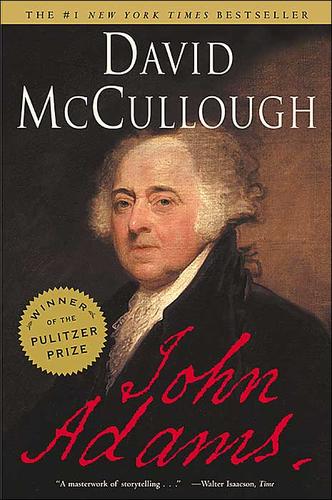
David McCullough's biography of John Adams, published in 2001, was a commercial phenomenon that spent years on bestseller lists and won the Pulitzer Prize. McCullough draws heavily on the Adams family papers — letters, diaries, and documents held at the Massachusetts Historical Society — to produce a portrait of America's second president that is warmer and more sympathetic than most previous assessments. Adams had long been overshadowed by Washington, Jefferson, and Hamilton in popular history, and McCullough's book was largely responsible for rehabilitating his reputation.
The biography's spine is Adams's long marriage to Abigail Adams, and McCullough uses their extraordinary correspondence — they were separated for years at a time during his diplomatic and political service — to reveal both characters. Abigail emerges as one of the more formidable figures in early American history: intellectually sharp, politically astute, and essential to her husband's equilibrium. The letters between them are among the most intimate documents produced by any American president, and McCullough quotes them extensively.
Adams's career included defending the British soldiers charged after the Boston Massacre — an act of legal courage that cost him politically — serving as America's first ambassador to the Court of St. James's, two terms as Washington's vice president, and a single term as president in which he kept the country out of war with France over the vociferous objections of Hamilton and the war faction of his own party. McCullough frames that decision as one of the most consequential acts of political courage in early American history.
The book's final section covers Adams's retirement in Quincy, his estrangement from and reconciliation with Jefferson, and the extraordinary coincidence of their deaths on the same day — July 4, 1826, the republic's fiftieth anniversary. McCullough is a narrative historian rather than an analytical one, and some critics have argued that his account is too celebratory and too thin on Adams's political failures, including the Alien and Sedition Acts. That objection is fair. But for readers who want to understand Adams as a person and a founding-era presence, McCullough's book is the most compelling available.
The big ideas
- 1.
Adams kept the United States out of war with France in 1798-1800, despite Hamilton's opposition and the political cost to his own party. McCullough presents this as his most consequential achievement.
- 2.
His defense of the British soldiers after the Boston Massacre illustrates a commitment to legal principle that made him a poor demagogue but an important constitutionalist.
- 3.
The Adams-Abigail partnership was unusually collaborative for its era. Her letters reveal a political intelligence that informed his decisions across decades.
