Talk to Just Kids like its author wrote you back.
Get the ideas that fit your life — not generic summaries.
- Chat with the book
- Audiobook-style main ideas
- Adapts to your life and goals
- Helps you take action
Just Kids, in detail
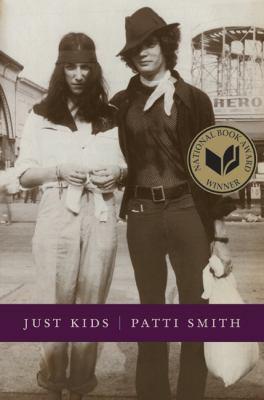
Just Kids is Patti Smith's National Book Award-winning memoir of her relationship with the photographer Robert Mapplethorpe, from their first meeting in New York in 1967 through their years of shared poverty, artistic development, and eventual celebrity, to Mapplethorpe's death from AIDS in 1989. It is one of the finest memoirs about the making of an artist — about the specific conditions under which serious work begins to be possible — and it is also a love story, though not a conventional one.
Smith arrived in New York at nineteen from South Jersey with almost no money and a certainty that she was meant to do something, though she did not yet know what. She met Mapplethorpe almost immediately; they became lovers, then best friends, then eventually artistic collaborators and mutual muses even after their romantic relationship ended. The book's early chapters are about survival — the mechanics of eating when broke, of finding rooms and being evicted, of the Chelsea Hotel, which Smith and Mapplethorpe eventually moved into and which was then a genuine artists' community.
The Chelsea Hotel sections are the memoir's warm center. Andy Warhol and his Factory circle, Janis Joplin, Jimi Hendrix, Allen Ginsberg, and dozens of other figures move through these chapters as ordinary presences in a world where Art was being made on small budgets with enormous seriousness. Smith neither romanticizes the poverty nor pretends it was not hard; she describes it with enough specificity to make the reader feel the cold and the hunger alongside the excitement.
The later chapters follow Smith into rock music — her formation of the Patti Smith Group, her development of a poetic-punk voice that drew on Rimbaud, Baudelaire, and Keith Richards simultaneously — while tracking Mapplethorpe's rise as a photographer of increasingly explicit and celebrated work. Their friendship survived his homosexuality, his other relationships, his AIDS diagnosis, and his death. The memoir's final pages, written decades after the events, carry the weight of that loss without melodrama.
The big ideas
- 1.
Artistic partnership is formative in ways that romantic partnership often is not. Smith and Mapplethorpe pushed each other toward their best work, and the memoir is partly an argument for the importance of that kind of mutual witness.
- 2.
Poverty does not prevent art, but it shapes it. Smith and Mapplethorpe's early work was constrained and enabled by material scarcity in specific ways the memoir traces.
- 3.
The Chelsea Hotel in the late 1960s and 1970s was a genuine artistic community — not a myth, but a real place where serious people worked in proximity and mutual influence.
