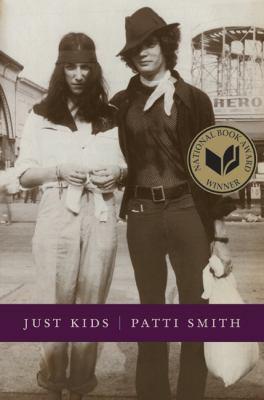
Just Kids by Patti Smith is a 2010 memoir book about friendship, art, new york. Artistic partnership is formative in ways that romantic partnership often is not. Smith and Mapplethorpe pushed each other toward their best work, and the memoir is partly an argument for the importance of that kind of mutual witness.
Summary
Just Kids is Patti Smith's National Book Award-winning memoir of her relationship with the photographer Robert Mapplethorpe, from their first meeting in New York in 1967 through their years of shared poverty, artistic development, and eventual celebrity, to Mapplethorpe's death from AIDS in 1989. It is one of the finest memoirs about the making of an artist — about the specific conditions under which serious work begins to be possible — and it is also a love story, though not a conventional one.
Smith arrived in New York at nineteen from South Jersey with almost no money and a certainty that she was meant to do something, though she did not yet know what. She met Mapplethorpe almost immediately; they became lovers, then best friends, then eventually artistic collaborators and mutual muses even after their romantic relationship ended. The book's early chapters are about survival — the mechanics of eating when broke, of finding rooms and being evicted, of the Chelsea Hotel, which Smith and Mapplethorpe eventually moved into and which was then a genuine artists' community.
The Chelsea Hotel sections are the memoir's warm center. Andy Warhol and his Factory circle, Janis Joplin, Jimi Hendrix, Allen Ginsberg, and dozens of other figures move through these chapters as ordinary presences in a world where Art was being made on small budgets with enormous seriousness. Smith neither romanticizes the poverty nor pretends it was not hard; she describes it with enough specificity to make the reader feel the cold and the hunger alongside the excitement.
The later chapters follow Smith into rock music — her formation of the Patti Smith Group, her development of a poetic-punk voice that drew on Rimbaud, Baudelaire, and Keith Richards simultaneously — while tracking Mapplethorpe's rise as a photographer of increasingly explicit and celebrated work. Their friendship survived his homosexuality, his other relationships, his AIDS diagnosis, and his death. The memoir's final pages, written decades after the events, carry the weight of that loss without melodrama.
Talk to Just Kids like its author wrote you back.
Get the ideas that fit your life — not generic summaries.
- Chat with the book
- Audiobook-style main ideas
- Adapts to your life and goals
- Helps you take action
Key takeaways
- 1.
Artistic partnership is formative in ways that romantic partnership often is not. Smith and Mapplethorpe pushed each other toward their best work, and the memoir is partly an argument for the importance of that kind of mutual witness.
- 2.
Poverty does not prevent art, but it shapes it. Smith and Mapplethorpe's early work was constrained and enabled by material scarcity in specific ways the memoir traces.
- 3.
The Chelsea Hotel in the late 1960s and 1970s was a genuine artistic community — not a myth, but a real place where serious people worked in proximity and mutual influence.
- 4.
Identity as artist precedes the specific form. Smith knew she was an artist before she knew she was a poet or musician; Mapplethorpe knew before he found photography. The memoir argues that this prior commitment is foundational.
- 5.
The relationship between biography and work is not transparent. Knowing Smith's life helps you understand some of her lyrics, but the work is not reducible to the life.
- 6.
Grief can be transformed into form. The memoir is itself the fulfillment of a promise Smith made to the dying Mapplethorpe — that she would tell their story. The book's existence is part of its subject.
- 7.
New York in the late 1960s and 1970s was a specific incubator — cheap, dangerous, and electrically alive. The city is not background in this memoir but a protagonist.
- 8.
Fame and integrity can coexist but require constant renegotiation. Smith's account of her emergence into celebrity is honest about its costs and its pleasures simultaneously.
Discussion questions
Use these on your own, with a book club, or as chat starters in Superbook. Book club version, ready to copy or print →
- 1.
Smith and Mapplethorpe's relationship evolved from romantic to something harder to name. What word would you use for what they were to each other by the end?
- 2.
The book won the National Book Award. What do you think the judges were responding to? Is it primarily a literary achievement or a biographical one?
- 3.
Smith describes her certainty that she was 'meant' for something before she knew what that something was. Do you find that conviction admirable, delusional, or both?
- 4.
The Chelsea Hotel community she describes sounds almost utopian. How much of that impression is nostalgia, and how much is documented history?
- 5.
Mapplethorpe's later work — the explicit photographs of gay S&M culture — was among the most controversial art of the late 1980s. How does the memoir prepare you for or avoid that controversy?
- 6.
Smith promised Mapplethorpe she would tell their story. Does that obligation shape the book? Is there anything it prevents her from saying?
- 7.
What does the memoir suggest about the role of sustained mutual influence in artistic development? Do you have relationships in your own life that function this way?
- 8.
The book's prose has a specific lyrical quality that reflects Smith's poetry. Does the literary style enhance or complicate the memoir's emotional honesty?
- 9.
Poverty in the early chapters is rendered with a kind of romance. Does that romance feel earned, or does the knowledge that Smith eventually became successful distort the representation?
- 10.
The memoir is dedicated to Mapplethorpe and is explicitly an act of mourning. How does that funerary purpose shape what is included and what is omitted?
- 11.
Smith names many of the famous figures she encountered in passing — Warhol, Hendrix, Ginsberg. Does that name-dropping serve a purpose, or does it occasionally feel like credential-collecting?
Themes
Frequently asked questions
-
Do I need to know Patti Smith's music to enjoy Just Kids?
No. The memoir is accessible to readers who know nothing about her work. It is primarily a book about friendship, artistic formation, and New York in the 1960s and 1970s, not a rock memoir in the conventional sense.
-
How explicit is the book about Smith's and Mapplethorpe's sex lives?
Smith treats her own sexuality with discretion. The book is candid about the fact that she and Mapplethorpe were lovers, that they were both sexually exploratory, and that Mapplethorpe came to identify as gay. It is not graphic. Mapplethorpe's photographic work, which is discussed, was sexually explicit.
-
How long does Just Kids take to read?
About six to seven hours. The prose moves fluidly, though it rewards slow reading. Smith's lyrical style means individual sentences sometimes deserve more attention than the page count would suggest.
-
Is the book about Mapplethorpe or about Smith?
Both, inseparably. The two are the book's co-subjects, and Smith's account of herself is always refracted through her relationship with him. Readers interested in either figure will find the dual focus the right choice.
-
Is Just Kids considered a classic memoir?
Yes. Since its 2010 National Book Award win it has been widely anthologized and taught, and is considered one of the definitive accounts of 1970s New York bohemian culture and of the relationship between friendship and artistic development.