Talk to Just My Type like its author wrote you back.
Get the ideas that fit your life — not generic summaries.
- Chat with the book
- Audiobook-style main ideas
- Adapts to your life and goals
- Helps you take action
Just My Type, in detail
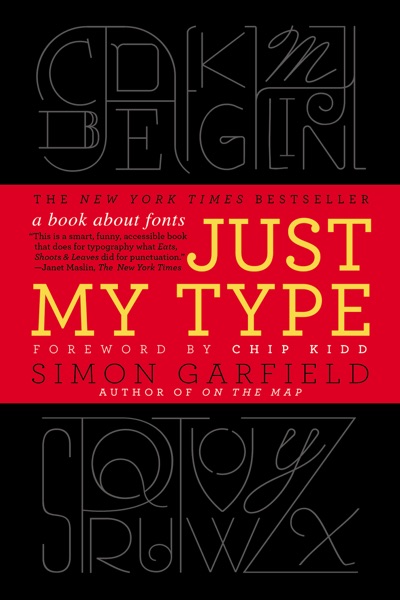
Just My Type is Simon Garfield's popular history of fonts and typography, aimed at general readers who have become dimly aware that fonts matter without having the vocabulary to explain why. It moves through the history of typeface design in a deliberately episodic style, mixing biographical profiles of designers, origin stories of famous fonts, and brief digressions into cultural controversies — the Comic Sans backlash, the debate over Clearview on highway signs, the politics of national identity in type.
The book is organized loosely around a set of fonts and the problems or personalities behind them, rather than strict chronological history. Garfield profiles Eric Gill, whose geometric sans-serif Gill Sans became the face of the BBC and Penguin Books, while also confronting the disturbing revelations about Gill's personal life. He covers Adrian Frutiger's contributions to airport signage and the rational ambitions of the Swiss school. He gives Helvetica its own chapter, tracing the typeface's domination of late-twentieth-century corporate design and the strong feelings — enthusiastic and hostile — it continues to provoke.
The digital era and the explosion of font choice it brought gets substantial treatment. Garfield is good at capturing the specific anxiety this created for designers: when anyone can access thousands of typefaces, the discipline required to choose wisely becomes more important and less common. The chapters on font crime — overused, mismatched, or contextually wrong typefaces in public life — are entertaining and instructive about how fonts carry meaning.
The limitation of the book is also its strength: Garfield is a journalist, not a designer, and he writes for curiosity rather than technical depth. Readers wanting rigorous formal analysis of letterform construction will need to look elsewhere. But as an introduction to why typography matters and how it got to be this way, Just My Type succeeds on its own terms — it makes the invisible visible without demanding that readers already care.
The big ideas
- 1.
Fonts carry meaning beyond their letterforms. The same word set in Helvetica and in Comic Sans communicates different things about the speaker, the context, and the expected audience.
- 2.
The history of type design is inseparable from the history of printing technology. Each shift — hand composition, machine setting, phototypesetting, digital — forced designers to rethink what letterforms could and should do.
- 3.
Helvetica was not a neutral choice even when it was intended as one. Its dominance in corporate design was an ideological stance about rationality, modernity, and universality.
