Talk to L.A. Confidential like its author wrote you back.
Get the ideas that fit your life — not generic summaries.
- Chat with the book
- Audiobook-style main ideas
- Adapts to your life and goals
- Helps you take action
L.A. Confidential, in detail
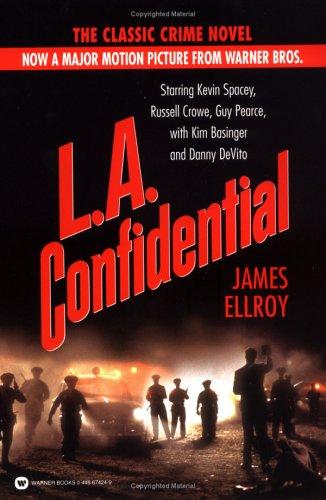
L.A. Confidential is the third novel in James Ellroy's L.A. Quartet, set in Los Angeles between 1951 and 1958. Three LAPD detectives — Bud White, a brutal enforcer who hates woman-beaters; Ed Exley, an ambitious careerist who will sacrifice colleagues to get ahead; and Jack Vincennes, a celebrity cop who sells access to a gossip magazine — are pulled into a web centered on a mass murder at a coffee shop called the Nite Owl. The case seems solved quickly, and then it isn't.
What the book is really about is the machinery that produced the 1950s Los Angeles fantasy: the construction of celebrity, the suppression of crime by embedding police departments in criminal enterprises, and the specific violence directed at Black Angelenos during a decade of housing segregation, police brutality, and civic boosterism. Ellroy is not interested in nostalgia. The postwar city in his telling is rotten at the foundation, and the three protagonists are all rotting with it in different ways — through violence, through ambition, through vanity.
Ellroy's prose is famously compressed. By L.A. Confidential he had developed a telegraphic style — short declarative sentences, present participles as verbs, no filler — that was unlike any crime fiction before it. Reading the first fifty pages requires adjustment; by page one hundred you may find you cannot read anything else. The novel is plotted with almost savage intricacy, and the three protagonists' stories braid and diverge in ways that reward close attention and punish casual reading. This is not a beach book.
Serious crime fiction readers rank L.A. Confidential among the best American novels of the twentieth century, and that is not hyperbole. But it is genuinely difficult — in length, density, moral ambiguity, and the sheer violence of its world. The 1997 film captures perhaps a third of the book's content and is excellent on its own terms. The novel is something different, and harder.
The big ideas
- 1.
Ellroy's telegraphic prose style — shorn of articles, conjunctions, and transitions — is an aesthetic achievement that forces readers to fill in emotional gaps the sentences refuse to supply.
- 2.
The three protagonists are not a good cop, a corrupt cop, and a redeemed cop. They are three different kinds of compromise, and the novel judges them all.
- 3.
1950s Los Angeles as Ellroy constructs it is a machine for suppressing truth: the celebrity press, the LAPD, the DA's office, and organized crime are all nodes in the same network.
