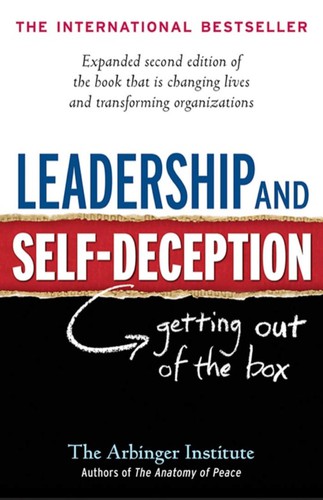
Talk to Leadership and Self-Deception like its author wrote you back.
Get the ideas that fit your life — not generic summaries.
- Chat with the book
- Audiobook-style main ideas
- Adapts to your life and goals
- Helps you take action
Leadership and Self-Deception, in detail
Leadership and Self-Deception is The Arbinger Institute's business fable about a leadership problem that most leaders don't recognize in themselves: the tendency to see other people as objects rather than as people. Written in narrative form, it follows a new executive named Tom Callum through a series of conversations that reveal how his attempts to solve problems at work are actually making them worse — because the way he's seeing his colleagues is itself the problem.
The book's central concept is "being in the box." When you're in the box, you've betrayed your own sense of what another person needs — perhaps you ignored a colleague's obvious stress, or failed to help when you knew you should — and you've then rationalized that betrayal by making the other person the problem. From inside the box, everything confirms your justification: their flaws become evidence for why they don't deserve your help; their virtues become threats to your self-image.
The critical insight is that when you're in the box, everything you do to try to solve problems makes them worse. You lecture about teamwork while refusing to genuinely collaborate. You demand accountability while protecting yourself from it. You work to change others' behavior without recognizing that your own way of seeing them is the source of the dysfunction. You can't solve a problem you're contributing to while denying you're contributing to it.
Getting out of the box is not primarily a technique. It's a shift in perception — seeing other people as people with their own needs, concerns, and perspectives rather than as obstacles or tools. The book argues that this shift is the precondition for any real leadership or genuine organizational change, and that all the systems and skills in the world don't compensate for being fundamentally in the box about the people you're trying to lead.
The big ideas
- 1.
Being 'in the box' means seeing other people as objects — as obstacles, vehicles, or irrelevancies — rather than as people with their own needs and perspectives.
- 2.
You get in the box by betraying your own sense of what another person needs, and then justifying that betrayal by making the other person the problem.
- 3.
When you're in the box, everything you do to fix problems makes them worse. You can't solve a problem you're contributing to while you're blind to your contribution.
