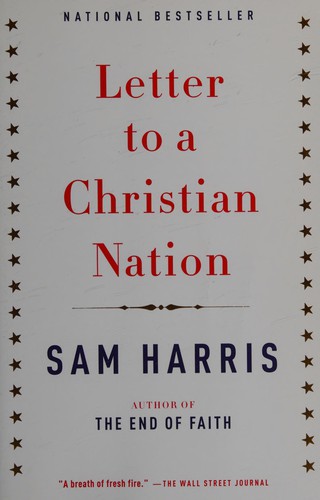
Talk to Letter to a Christian Nation like its author wrote you back.
Get the ideas that fit your life — not generic summaries.
- Chat with the book
- Audiobook-style main ideas
- Adapts to your life and goals
- Helps you take action
What it argues
Letter to a Christian Nation is a short, blunt book written in direct address to American Christians. Harris wrote it as a follow-up to The End of Faith and frames it explicitly as a response to his mail: the letters from believers who were offended by that earlier book. Rather than soften his position, he sharpens it. The argument, compressed into roughly ninety pages, is that Christian belief as commonly practiced in the United States is neither intellectually defensible nor morally exemplary, and that its influence on public life causes real harm.
Harris moves through several related claims. He argues that religious faith — defined as belief held without evidence — is a uniquely dangerous epistemic habit because it insulates conclusions from revision. He applies this to specific American policy disputes: stem-cell research, sex education, and the death penalty. On each, he argues that Christian assumptions produce outcomes harder to justify than secular alternatives. He also challenges the idea that religion is the foundation of morality, pointing to passages in the Bible endorsing slavery, genocide, and misogyny to argue that even devout believers are actually applying moral standards that are prior to and independent of the texts they claim to follow.
What it gets right
- 1.
Faith, defined as belief without sufficient evidence, is not a virtue but a dangerous habit that makes beliefs immune to correction.
- 2.
The Bible contains passages endorsing slavery, genocide, and the stoning of disobedient children. Believers who reject these passages are already applying moral standards external to the text.
- 3.
There is no scientific controversy about evolution. The debate is entirely manufactured by religious interests, and it damages science education.
What it covers
Who wrote it
Sam Harris is an American neuroscientist and philosopher who became one of the prominent voices of the so-called New Atheist movement. He holds a PhD in neuroscience from UCLA. His books include The End of Faith, The Moral Landscape, Free Will, and Waking Up. He later launched the Waking Up meditation app and the Making Sense podcast, which covers science, philosophy, and politics. His work is consistently controversial, generating strong criticism from religious conservatives, secular progressives, and academic philosophers alike.
