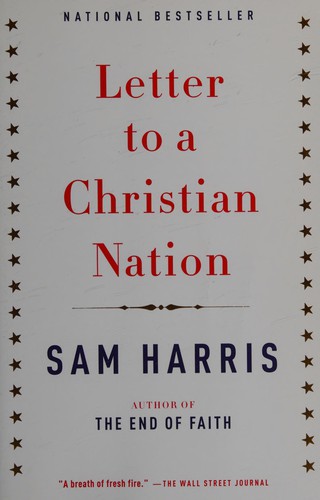
Letter to a Christian Nation by Sam Harris is a 2006 philosophy book about religion, secularism, ethics. Faith, defined as belief without sufficient evidence, is not a virtue but a dangerous habit that makes beliefs immune to correction.
Summary
Letter to a Christian Nation is a short, blunt book written in direct address to American Christians. Harris wrote it as a follow-up to The End of Faith and frames it explicitly as a response to his mail: the letters from believers who were offended by that earlier book. Rather than soften his position, he sharpens it. The argument, compressed into roughly ninety pages, is that Christian belief as commonly practiced in the United States is neither intellectually defensible nor morally exemplary, and that its influence on public life causes real harm.
Harris moves through several related claims. He argues that religious faith — defined as belief held without evidence — is a uniquely dangerous epistemic habit because it insulates conclusions from revision. He applies this to specific American policy disputes: stem-cell research, sex education, and the death penalty. On each, he argues that Christian assumptions produce outcomes harder to justify than secular alternatives. He also challenges the idea that religion is the foundation of morality, pointing to passages in the Bible endorsing slavery, genocide, and misogyny to argue that even devout believers are actually applying moral standards that are prior to and independent of the texts they claim to follow.
The book dedicates a section to Islam, arguing that the logical extension of certain Islamic doctrines is more dangerous than their Christian equivalents, and that the refusal of secular liberals to criticize Islam with the same standards they apply to Christianity is incoherent. This section has aged unevenly. Harris also briefly defends Buddhism as comparatively benign on empirical grounds, which many readers find jarring given the book's atheist framing.
Letter to a Christian Nation is a work of rhetorical confrontation, not of academic theology. It does not engage charitably with sophisticated religious philosophy. Harris is addressing the median American Christian believer, not Aquinas or Kierkegaard. Readers who want a careful engagement with the strongest versions of religious argument will need to look elsewhere. What the book does offer is a clear, aggressive articulation of one secular worldview and its discontents — delivered in prose that makes no concession to diplomatic concern.
Talk to Letter to a Christian Nation like its author wrote you back.
Get the ideas that fit your life — not generic summaries.
- Chat with the book
- Audiobook-style main ideas
- Adapts to your life and goals
- Helps you take action
Key takeaways
- 1.
Faith, defined as belief without sufficient evidence, is not a virtue but a dangerous habit that makes beliefs immune to correction.
- 2.
The Bible contains passages endorsing slavery, genocide, and the stoning of disobedient children. Believers who reject these passages are already applying moral standards external to the text.
- 3.
There is no scientific controversy about evolution. The debate is entirely manufactured by religious interests, and it damages science education.
- 4.
Abstinence-only education, driven by Christian doctrine, increases rather than reduces rates of teen pregnancy and STIs where it has been studied.
- 5.
Secular societies — Scandinavia in particular — perform better on most measures of human welfare than more religious ones, suggesting religion is not necessary for societal morality.
- 6.
The widespread liberal reluctance to criticize Islam with the same rigor applied to Christianity is a form of double standard that Harris calls moral cowardice.
- 7.
Morality grounded in human flourishing and suffering is more coherent and revisable than morality grounded in divine command, which requires no justification beyond authority.
- 8.
Religious moderation, by treating faith as beyond criticism, provides political cover for its extreme forms without offering a principled way to stop them.
Discussion questions
Use these on your own, with a book club, or as chat starters in Superbook. Book club version, ready to copy or print →
- 1.
Harris argues that faith — belief without evidence — is inherently unreliable. Do you find this characterization fair, or does it miss something important about how religious belief actually works?
- 2.
He claims that Christians already apply a moral standard independent of Scripture when they reject its most disturbing passages. What does that imply about where moral authority actually comes from?
- 3.
Harris focuses on the median American Christian rather than sophisticated theologians. Is that a fair rhetorical choice or a cheap one?
- 4.
Where does his argument against religious moderation go, if taken seriously? Would it require rejecting all compromise with religious institutions?
- 5.
His comparison of countries by religious belief and social outcomes is one of his most empirical moves. What assumptions underlie that comparison, and how much weight should it carry?
- 6.
Harris is largely silent about the ways religious communities have driven social progress — abolitionism, civil rights. Does that omission weaken his case?
- 7.
He argues that atheism has no logical connection to the atrocities of Stalin or Mao, while Christianity does have a logical connection to the Inquisition. Is that distinction defensible?
- 8.
How does the book land differently for a reader who was raised religious versus one who was not?
- 9.
Harris writes with obvious contempt for his imagined reader. Does that rhetorical choice help or hurt the book's actual persuasive power?
- 10.
He treats Islam and Christianity differently in places, arguing one is currently more dangerous than the other. Does that distinction hold up to scrutiny?
- 11.
What would Harris have to concede to give a fair account of the best arguments on the other side? Does he ever come close to making those concessions?
Themes
Frequently asked questions
-
What is Letter to a Christian Nation about?
It's a short, direct argument addressed to American Christians making the case that religious faith is intellectually indefensible and that its influence on US public policy causes measurable harm. Harris covers evolution, sex education, the Bible's moral content, and the nature of ethical reasoning.
-
How long does it take to read Letter to a Christian Nation?
About two hours. The book is under 100 pages and reads quickly. Harris writes in tight, declarative prose with almost no padding. You can finish it in a single sitting.
-
Is Letter to a Christian Nation worth reading?
Worth reading if you want a clear statement of the secular atheist critique of American religion. Worth skipping if you want a rigorous philosophical engagement with religious epistemology — Harris is not writing that book here.
-
Who should read Letter to a Christian Nation?
Readers curious about the case against religious faith, those looking for a compressed version of arguments Harris develops more fully in The End of Faith, and people willing to have their assumptions challenged regardless of where they currently stand.
-
What is Harris's main argument?
That faith — believing things without sufficient evidence — is dangerous because it bypasses the mechanisms that correct false beliefs. And that a secular, evidence-based ethics grounded in human suffering and flourishing is more coherent and more honest than an ethics grounded in divine authority.
Similar books
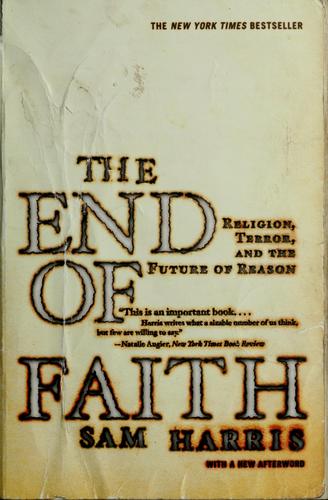
The End of Faith: Religion, Terror, and the Future of Reason
Sam Harris
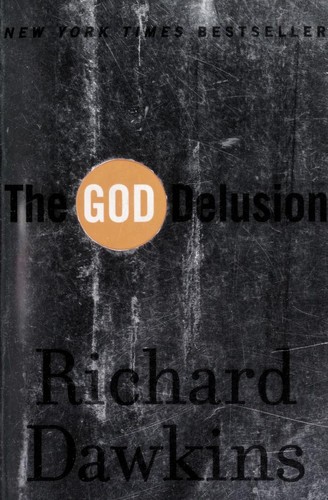
The God Delusion
Richard Dawkins
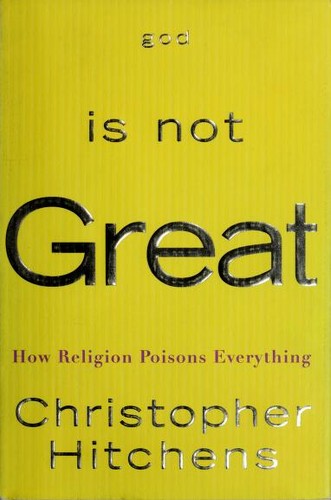
God Is Not Great: How Religion Poisons Everything
Christopher Hitchens
Waking Up: A Guide to Spirituality Without Religion
Sam Harris
