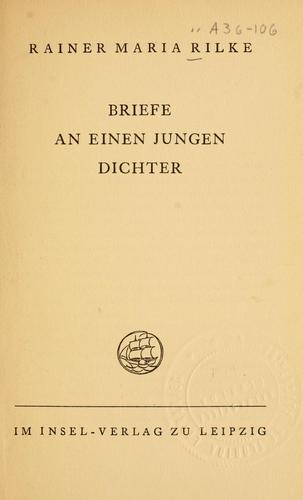
Talk to Letters to a Young Poet like its author wrote you back.
Get the ideas that fit your life — not generic summaries.
- Chat with the book
- Audiobook-style main ideas
- Adapts to your life and goals
- Helps you take action
What it argues
Letters to a Young Poet is a collection of ten letters Rilke wrote between 1903 and 1908 to Franz Xaver Kappus, a young military cadet and aspiring poet who had sent Rilke samples of his verse and asked for criticism. Rilke declined to evaluate the poems. What he offered instead was something harder to classify: extended meditations on the nature of artistic vocation, the necessity of solitude, the difficulty of love, and the importance of living one's questions rather than rushing toward answers. Kappus published the letters posthumously in 1929, a few years after Rilke's death.
The most quoted passage, in the first letter, sets the tone: Rilke tells Kappus to ask himself whether he must write. Not whether he wants to, not whether others think he should, but whether he would die if the possibility were taken away. This kind of testing — severe, inward, resistant to external validation — runs through all ten letters. Rilke is consistently skeptical of criticism, competition, and the need for approval as guides for the creative life. The only real question is whether the work is necessary to the person making it.
What it gets right
- 1.
Ask not whether you want to write but whether you must. The only reliable test for artistic vocation is necessity — whether the absence of the work would diminish you irreversibly.
- 2.
Solitude is not loneliness. Rilke treats it as the ground in which serious inner life grows, and the precondition for any real encounter with another person.
- 3.
Live your questions. Rilke explicitly discourages rushing toward answers to large questions about love, God, or meaning — the process of living inside them honestly is the point.
What it covers
Who wrote it
Rainer Maria Rilke (1875–1926) was an Austro-Bohemian poet and prose writer, widely regarded as one of the greatest German-language poets of the twentieth century. His major works include the Duino Elegies and Sonnets to Orpheus, both completed in 1922 after years of interruption. He spent much of his adult life in voluntary solitude across Europe, moving between Paris, Switzerland, and various aristocratic estates. He worked briefly as secretary to the sculptor Auguste Rodin, an experience that shaped his thinking about artistic discipline. He died of leukemia in Switzerland in 1926.
