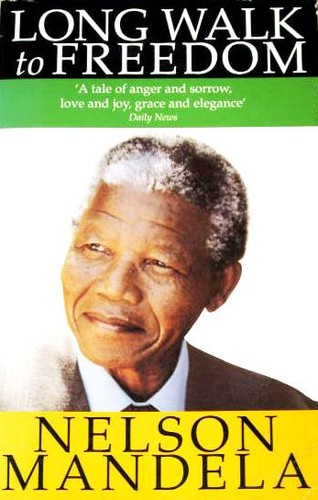
Talk to Long Walk to Freedom like its author wrote you back.
Get the ideas that fit your life — not generic summaries.
- Chat with the book
- Audiobook-style main ideas
- Adapts to your life and goals
- Helps you take action
What it argues
Nelson Mandela's autobiography traces his life from a rural Xhosa childhood in the Transkei to his release from prison in 1990 after twenty-seven years of incarceration, and ends with his election as South Africa's first democratically chosen president in 1994. It is one of the most significant political memoirs of the twentieth century, and also a searching account of a man who remade himself repeatedly across eight decades.
The early chapters establish Mandela's formation: his schooling in the Methodist mission tradition, his move to Johannesburg, his legal training, and his radicalization through the African National Congress. He describes the gradual closing off of any legal path to equality under apartheid, the government's systematic criminalization of Black political life, and his own evolution from a proponent of nonviolent protest to an advocate — eventually, the leader — of the ANC's armed wing, Umkhonto we Sizwe. The decision to embrace sabotage was not taken lightly, and Mandela writes about it with the caution of someone who knows the precedent it set.
What it gets right
- 1.
Freedom is indivisible: Mandela argues that neither oppressor nor oppressed is free under a system of domination — that apartheid degraded its enforcers as well as its victims.
- 2.
The decision to embrace armed resistance came after exhausting legal and nonviolent options. Mandela frames it not as inevitable but as a specific, painful choice made at a specific historical moment.
- 3.
Prison can be transformed into a site of resistance if the imprisoned maintain solidarity, dignity, and a commitment to educating themselves and others.
What it covers
Who wrote it
Nelson Mandela (1918–2013) was a South African anti-apartheid activist, lawyer, and politician who served as the first democratically elected president of South Africa from 1994 to 1999. He spent twenty-seven years in prison, including eighteen years on Robben Island, after being convicted of sabotage and conspiracy to overthrow the state. He was awarded the Nobel Peace Prize jointly with F. W. de Klerk in 1993. Long Walk to Freedom, published the year of his election, was partly written during his imprisonment and completed after his release.
