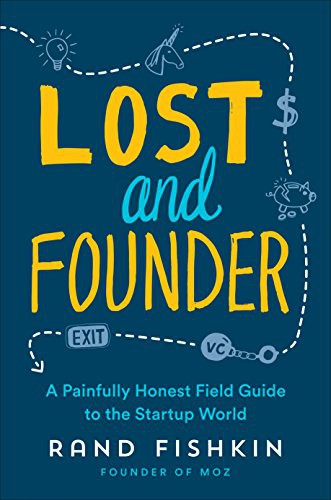
Talk to Lost and Founder like its author wrote you back.
Get the ideas that fit your life — not generic summaries.
- Chat with the book
- Audiobook-style main ideas
- Adapts to your life and goals
- Helps you take action
What it argues
Rand Fishkin built Moz, the SEO software company, from a bootstrapped consultancy into a venture-backed business with millions in revenue — and then watched it nearly collapse under the weight of that growth. Lost and Founder is his candid account of what happened and what he learned, structured as a corrective to the standard Silicon Valley success narrative.
Fishkin's central argument is that the startup mythology that circulates through the industry — raise venture capital, grow fast, exit big — describes a path that works for a very small number of companies and is actively harmful advice for most. Venture capital creates alignment between investor and founder only when the company is on track for a massive exit. For companies that are good but not exceptional, the structure distorts decision-making, compresses timelines, and eventually requires the founder to hand over control to people optimizing for a different outcome. Moz was a profitable and respected business before Fishkin raised VC. After, it spent years chasing a scale it never reached.
What it gets right
- 1.
Venture capital is not a necessary step for most businesses. It creates structural pressure for a specific kind of outcome that many founders don't actually want.
- 2.
Building a transparent company culture has real costs. Fishkin's radical transparency at Moz created trust and loyalty but also created anxiety and noise that slowed decisions.
- 3.
Great products don't automatically win. Distribution, positioning, and timing all matter as much as product quality, and often more.
What it covers
Who wrote it
Rand Fishkin is the co-founder of Moz, the SEO software company he grew from a blog and consultancy into a venture-backed business over fifteen years. He left Moz in 2018 and subsequently founded SparkToro, an audience research company built without venture capital. He writes frequently about entrepreneurship, marketing, and the startup industry at sparktoro.com and via his newsletter. Lost and Founder, published in 2018, drew widespread attention for its honesty about the costs of venture-backed growth.
