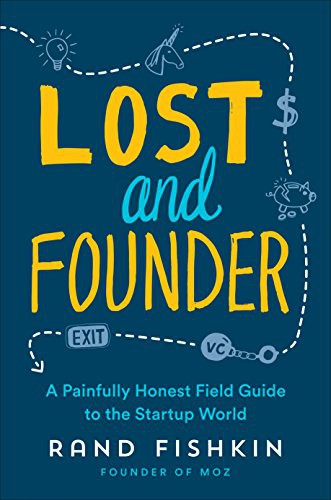
Lost and Founder by Rand Fishkin is a 2018 business book about entrepreneurship, startup culture, transparency. Venture capital is not a necessary step for most businesses. It creates structural pressure for a specific kind of outcome that many founders don't actually want.
Summary
Rand Fishkin built Moz, the SEO software company, from a bootstrapped consultancy into a venture-backed business with millions in revenue — and then watched it nearly collapse under the weight of that growth. Lost and Founder is his candid account of what happened and what he learned, structured as a corrective to the standard Silicon Valley success narrative.
Fishkin's central argument is that the startup mythology that circulates through the industry — raise venture capital, grow fast, exit big — describes a path that works for a very small number of companies and is actively harmful advice for most. Venture capital creates alignment between investor and founder only when the company is on track for a massive exit. For companies that are good but not exceptional, the structure distorts decision-making, compresses timelines, and eventually requires the founder to hand over control to people optimizing for a different outcome. Moz was a profitable and respected business before Fishkin raised VC. After, it spent years chasing a scale it never reached.
The book is organized around startup myths and the more complicated reality Fishkin experienced. Myths include the idea that great products always win, that transparency is always good, that the right investor will help you, and that a fast-growing company is a healthy one. Each chapter offers his experience as counterexample and attempts a more honest framing. Fishkin is unusually willing to discuss his own mental health, his personal failures as a manager, and the damage his company's struggles did to his employees and his marriage.
Lost and Founder is not a how-to book. It doesn't give you a process or a framework. What it gives is an unusually honest account of building a company from someone who did it publicly, failed publicly, and is trying to help the next founder ask better questions before they sign the term sheet.
Talk to Lost and Founder like its author wrote you back.
Get the ideas that fit your life — not generic summaries.
- Chat with the book
- Audiobook-style main ideas
- Adapts to your life and goals
- Helps you take action
Key takeaways
- 1.
Venture capital is not a necessary step for most businesses. It creates structural pressure for a specific kind of outcome that many founders don't actually want.
- 2.
Building a transparent company culture has real costs. Fishkin's radical transparency at Moz created trust and loyalty but also created anxiety and noise that slowed decisions.
- 3.
Great products don't automatically win. Distribution, positioning, and timing all matter as much as product quality, and often more.
- 4.
The alignment between founders and venture investors holds only when the company is on track for a massive exit. In the messy middle, interests diverge.
- 5.
Burnout and depression are common among founders but rarely discussed honestly. The pressure to perform confidence publicly while experiencing private doubt is a structural feature of the founder role, not a personal failing.
- 6.
The metrics that attract investors — growth rate, ARR, logo count — are not always the metrics that indicate a healthy business. Fishkin learned to distinguish between the two too late.
- 7.
Hiring people before you understand the role well enough to evaluate them is one of the most expensive mistakes a growing company makes.
- 8.
The founder is usually the last person to learn what's actually broken. Building feedback loops that get honest information to the top is harder than most leadership books acknowledge.
Discussion questions
Use these on your own, with a book club, or as chat starters in Superbook. Book club version, ready to copy or print →
- 1.
Fishkin argues VC is the wrong tool for most companies. What kind of business would you build if external funding and fast growth were not on the table?
- 2.
His transparency experiment at Moz had real costs alongside the benefits. What's the right level of transparency for the culture you work in or want to build?
- 3.
Where in your career have you confused a growing company with a healthy one? What signals were you missing?
- 4.
Fishkin is unusually open about depression and burnout. How does the standard founder narrative around resilience and grit make it harder to talk about this honestly?
- 5.
The book describes a moment where Moz's board essentially overruled Fishkin on key decisions. What structures would you want in place before giving up that kind of control?
- 6.
What metrics does your organization optimize for, and are those the same metrics that indicate a genuinely healthy business?
- 7.
Fishkin regrets several hires made before he understood the role well enough to evaluate candidates. How do you currently evaluate whether you're ready to hire for a given function?
- 8.
The book argues that great products don't automatically win. What distribution or positioning advantage does a competitor have that your best product can't overcome on its own?
- 9.
How much of the startup mythology Fishkin critiques have you internalized, and where does it shape your decisions in ways you might not want?
- 10.
Fishkin ended up leaving Moz. What would have to happen in a company you built or lead for you to conclude that leaving was the right call?
- 11.
Who in your professional network do you think is performing confidence they don't feel? What would it take to make that conversation normal rather than taboo?
- 12.
The book is a postmortem as much as a how-to. What's the most valuable kind of startup failure narrative, and why don't we hear more of them?
Themes
Frequently asked questions
-
Is Lost and Founder worth reading?
Yes, especially if you're considering raising venture capital or are already building a funded startup. Fishkin's candor about the misalignments between founder and investor goals, and the psychological costs of public company-building, fills a gap most startup books leave empty.
-
What is Lost and Founder about?
Rand Fishkin's honest account of building and nearly destroying Moz, the SEO software company. He uses the experience to challenge common startup myths — about venture capital, transparency, product quality, and founder success — with a more complicated version of what actually happened.
-
Who should read Lost and Founder?
Founders who are weighing venture capital, entrepreneurs who feel the gap between the public narrative and their private experience, and anyone building a business who wants a realistic account rather than a success story polished for investors.
-
What does Rand Fishkin think about venture capital?
That it's a tool designed for a specific purpose — generating massive returns on a small percentage of investments — and that it is structurally misaligned with founders who are building good, profitable, durable businesses rather than potential unicorns. He isn't anti-VC, but he argues most founders reach for it without fully understanding the constraints it creates.
-
What's the most important lesson in Lost and Founder?
Probably that the metrics you choose to optimize for shape the company you end up with, and that venture-backed growth metrics can pull a company away from what made it valuable in the first place. Fishkin wishes he'd understood the difference between a fast-growing company and a healthy one earlier.
Similar books
Zero to One: Notes on Startups, or How to Build the Future
Peter Thiel

Blitzscaling: The Lightning-Fast Path to Building Massively Valuable Companies
Reid Hoffman and Chris Yeh
The Ride of a Lifetime
Robert Iger
Traction: Get a Grip on Your Business
Gino Wickman
