Talk to Magpie Murders like its author wrote you back.
Get the ideas that fit your life — not generic summaries.
- Chat with the book
- Audiobook-style main ideas
- Adapts to your life and goals
- Helps you take action
Magpie Murders, in detail
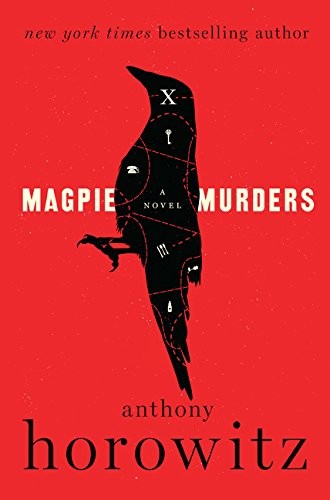
Magpie Murders is a novel in two interlocking halves. The outer frame follows Susan Ryeland, a book editor at a small London publishing house, who is reading the final manuscript from her most famous author — Alan Conway, whose Atticus Pünd detective series has made the press wealthy. The manuscript is a classic 1950s-style country house murder mystery, complete with village suspects, a peculiar detective, and a body discovered after a garden party. But when Susan reaches the end of the manuscript, she finds the last chapter is missing — and then Conway himself turns up dead.
What Horowitz is doing structurally is unusual and worth appreciating: the book contains a complete Atticus Pünd mystery (Magpie Murders, the novel within the novel) alongside the Susan Ryeland story that frames it. Both plots are fully developed and both have independent solutions. The inner mystery is an elegant pastiche of Agatha Christie — you can enjoy it entirely on its own terms. The outer mystery is a more contemporary thriller about publishing, authorship, and what it means to create popular fiction. The connection between them is what the book is actually about: how stories encode their makers, and how closely truth hides inside fiction.
Horowitz is perhaps the most technically skilled pure mystery writer working today — he has been authorized to write both new Sherlock Holmes and James Bond novels, and he clearly loves the form. The Christie pastiche in the inner novel is dead-accurate and genuinely playable: the clues are fair, the solution is plausible, and the detective is charming. The outer novel is slightly more uneven but more ambitious. The commentary on publishing, on the economics of commercial fiction, and on what authors owe their readers is sharp and often funny.
The novel will delight mystery fans, particularly anyone who has loved Christie or the Golden Age tradition and wants something that plays with and honors it simultaneously. General readers who don't know Christie may find the inner novel a slower read, though Horowitz is careful enough that you don't need prior knowledge. A possible complaint: the outer novel's solution is slightly less elegant than the inner one, which is perhaps unavoidable when you've shown your readers what perfect construction looks like.
The big ideas
- 1.
Horowitz builds a fully playable locked-room mystery inside a novel about the moral and commercial reality behind creating those mysteries — the form and the critique reinforce each other.
- 2.
The Atticus Pünd sections demonstrate that the Golden Age puzzle mystery is still a living form when executed with genuine craft, not pastiche nostalgia.
- 3.
Susan Ryeland's perspective as an editor rather than a detective gives the novel an unusual viewpoint: someone who reads professionally but is not trained to investigate.
