Talk to Mastery like its author wrote you back.
Get the ideas that fit your life — not generic summaries.
- Chat with the book
- Audiobook-style main ideas
- Adapts to your life and goals
- Helps you take action
What it argues
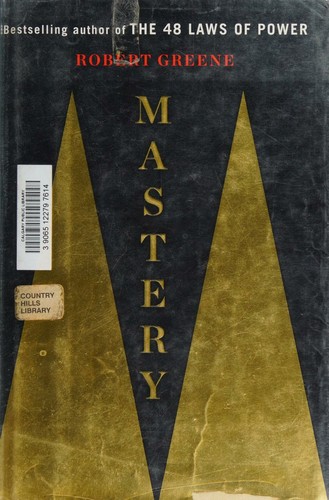
Mastery is Robert Greene's long account of how extraordinary human mastery develops — from childhood inclinations through apprenticeship through creative independence to the integration that characterizes true mastery. Drawing on the lives of nine historical masters (Leonardo da Vinci, Charles Darwin, Benjamin Franklin, Albert Einstein, and others) and contemporary figures (César Rodríguez, Temple Grandin, V.S. Ramachandran), Greene builds a framework for the path to mastery as a developmental journey available to anyone who follows it seriously.
Greene's framework has three main phases. The apprenticeship phase begins with identifying your life's task — the work most aligned with your innate inclinations — and submitting to a sustained period of learning that subordinates ego to skill acquisition. The apprenticeship phase is defined by observation, skill acquisition through practice, and the gradual development of the ability to think rather than just execute in the field. Greene argues that modern impatience with this phase is the primary obstacle to mastery: most people skip the years of humility required to build real foundations.
What it gets right
- 1.
The life's task: identifying the work most aligned with your deep inclinations and committing to it is the first and most consequential decision on the path to mastery.
- 2.
The apprenticeship phase requires submitting ego to learning — observing deeply, acquiring foundational skills, and resisting the urge to demonstrate yourself before you have something to demonstrate.
- 3.
The Social Intelligence requirement: mastery requires not just technical skill but the ability to navigate the human element — reading people, managing relationships, and understanding power dynamics.
What it covers
Who wrote it
Robert Greene is an American author best known for The 48 Laws of Power (1998), which became a bestseller and a cult classic on power dynamics. He followed it with The Art of Seduction, The 33 Strategies of War, The 50th Law (with rapper 50 Cent), Mastery (2012), and The Laws of Human Nature (2018). His books draw heavily on historical biography to extract principles of human behavior. He was educated at the University of Wisconsin-Madison and UC Berkeley and worked in various fields before becoming a full-time author.
