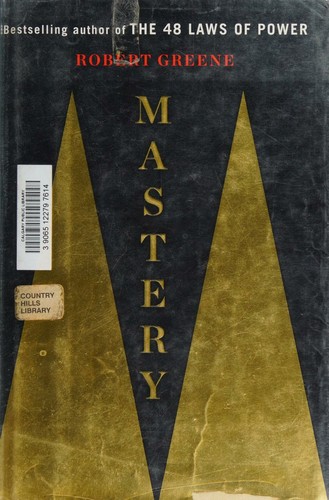
Mastery by Robert Greene is a 2012 self-help book about mastery, career development, learning. The life's task: identifying the work most aligned with your deep inclinations and committing to it is the first and most consequential decision on the path to mastery.
Summary
Mastery is Robert Greene's long account of how extraordinary human mastery develops — from childhood inclinations through apprenticeship through creative independence to the integration that characterizes true mastery. Drawing on the lives of nine historical masters (Leonardo da Vinci, Charles Darwin, Benjamin Franklin, Albert Einstein, and others) and contemporary figures (César Rodríguez, Temple Grandin, V.S. Ramachandran), Greene builds a framework for the path to mastery as a developmental journey available to anyone who follows it seriously.
Greene's framework has three main phases. The apprenticeship phase begins with identifying your life's task — the work most aligned with your innate inclinations — and submitting to a sustained period of learning that subordinates ego to skill acquisition. The apprenticeship phase is defined by observation, skill acquisition through practice, and the gradual development of the ability to think rather than just execute in the field. Greene argues that modern impatience with this phase is the primary obstacle to mastery: most people skip the years of humility required to build real foundations.
The creative-active phase follows, characterized by experimentation, risk-taking, and the development of a distinctive approach. The final phase of mastery is the integration of accumulated knowledge and intuition into a mode of perception that operates below conscious thought — what masters describe as instinct or intuition but is actually the product of deep, decades-long experience.
Greene's prose is more elaborate than most productivity or self-improvement books, and Mastery is long. But the range of historical examples makes it absorbing, and the central argument — that mastery is a path, not a destination, and that it requires sustained, ego-subordinating practice over years — is one of the more serious treatments of the topic available for a general audience.
Talk to Mastery like its author wrote you back.
Get the ideas that fit your life — not generic summaries.
- Chat with the book
- Audiobook-style main ideas
- Adapts to your life and goals
- Helps you take action
Key takeaways
- 1.
The life's task: identifying the work most aligned with your deep inclinations and committing to it is the first and most consequential decision on the path to mastery.
- 2.
The apprenticeship phase requires submitting ego to learning — observing deeply, acquiring foundational skills, and resisting the urge to demonstrate yourself before you have something to demonstrate.
- 3.
The Social Intelligence requirement: mastery requires not just technical skill but the ability to navigate the human element — reading people, managing relationships, and understanding power dynamics.
- 4.
Deep observation — attending carefully to the patterns, details, and subtle signals in your field — is a trainable skill that distinguishes masters from competent practitioners.
- 5.
Resistance to apprenticeship — the desire to skip ahead to creative independence without paying foundational dues — is the most common cause of arrested development in talented people.
- 6.
Creative breakthroughs typically come from the intersection of deep domain knowledge and an outsider perspective. Maintaining both simultaneously is the condition for the most original work.
- 7.
Mastery is characterized by a mode of holistic, intuitive perception that operates below conscious reasoning. It takes decades to build and cannot be replicated by people who have not done the foundational work.
- 8.
Historical masters — Leonardo, Darwin, Einstein — did not have exceptional innate gifts that ordinary people lack. They had exceptional patience, appetite for deep observation, and commitment to their life's task.
Discussion questions
Use these on your own, with a book club, or as chat starters in Superbook. Book club version, ready to copy or print →
- 1.
Greene argues that identifying your life's task — the work most aligned with your innate inclinations — is the critical first decision. What is yours? How clearly can you articulate it?
- 2.
What is your relationship with the apprenticeship phase — the period of ego-subordinating skill acquisition? Have you been patient enough with it, or have you rushed to creative independence?
- 3.
Greene profiles historical masters to illustrate the path. Which of the nine masters he discusses most resonates with your own situation or inclinations? Why?
- 4.
Social intelligence — the ability to navigate human dynamics — is one of Greene's required elements of mastery. How well developed is this capacity in you relative to your technical skills?
- 5.
Deep observation as a learnable practice: what in your field are you currently failing to observe that a true master would notice?
- 6.
Greene argues that resistance to apprenticeship is the most common cause of arrested talent. Where in your own development have you resisted paying foundational dues?
- 7.
The book is long and covers many lives in detail. How does the depth of historical examples affect your confidence in the framework? Does more evidence produce more conviction?
- 8.
Creative breakthroughs come from combining deep expertise with an outsider perspective. Where in your field are you deeply inside? Where are you still an outsider?
- 9.
What would it mean for you to commit to the apprenticeship phase in your most important domain for the next five years — to subordinate ego and demonstration to learning?
- 10.
Greene argues that mastery builds a kind of intuition that operates below conscious reasoning. Have you experienced this in any domain — a knowledge you can't fully articulate but can reliably act on?
- 11.
The book covers the role of mentors extensively. Who has been your most formative mentor? What made their teaching effective? What kind of mentorship do you most need now?
- 12.
Greene's writing is elaborate and the book is long. Does the length feel like necessary depth or unnecessary padding? What would be lost in a shorter version?
Themes
Frequently asked questions
-
Is Mastery worth reading?
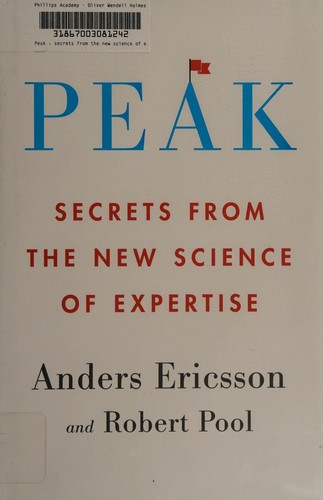
Yes if you want a serious, historically grounded account of how exceptional skill develops. Greene's range of examples is remarkable and the framework is coherent. The book is long — plan for eight hours — and some readers find the prose style heavy. If you want a shorter account of similar ideas, Peak by Ericsson is more compact.
-
How long does it take to read Mastery?
About seven to eight hours at average pace for the roughly 350-page book. Each chapter is substantial and the historical portraits are detailed. It rewards slow reading.
-
What is the main idea of Mastery?
Mastery is a developmental journey available to anyone who follows it seriously: identify your life's task, submit to a genuine apprenticeship phase, develop social intelligence alongside technical skill, and over years develop the integrated, intuitive perception that characterizes true mastery. Patience and ego-subordination are the primary requirements.
-
How does Mastery compare to Peak by Ericsson?
Peak is a scientific account of deliberate practice. Mastery is a historical and biographical account of the full developmental journey. Peak is more rigorous scientifically; Mastery is more inspiring narratively. They address complementary questions.
-
Who should read Mastery?
People who are serious about developing exceptional skill in a specific domain and want a longer-range perspective than most productivity or self-improvement books provide. Also useful for people early in their careers who are impatient with the apprenticeship phase.