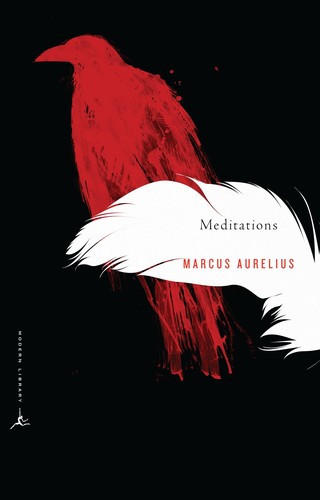
Talk to Meditations like its author wrote you back.
Get the ideas that fit your life — not generic summaries.
- Chat with the book
- Audiobook-style main ideas
- Adapts to your life and goals
- Helps you take action
What it argues
Meditations is not a book Marcus Aurelius wrote for anyone to read. It is a private journal — written in Greek between roughly 161 and 180 AD while he was ruling the Roman Empire — in which he argues with himself about how to think and live. The result is the clearest surviving account of Stoic philosophy applied under real pressure: wars on the frontier, plague, court intrigue, ungrateful colleagues, and the ordinary daily temptations of pride, impatience, and distraction.
The central argument is that almost everything outside your own mind is beyond your control, and that clinging to it produces suffering. What you can control is your judgment: how you interpret events, what you tell yourself about other people's behavior, whether you act in accordance with reason and virtue. Aurelius returns to this point obsessively across twelve books, often from different angles. He is not writing for posterity. He is reminding himself of things he already knows and keeps forgetting under the pressure of daily life.
What it gets right
- 1.
Almost nothing outside your own mind is within your control. The one thing you can govern is your judgment — how you interpret events and how you choose to respond.
- 2.
Other people act badly out of ignorance, not malice. Anger toward them is irrational because it punishes you and changes nothing in them.
- 3.
Everything is impermanent: careers, reputations, empires, and lives. Keeping this in view is not nihilism — it is a corrective against taking trivial things too seriously.
What it covers
Who wrote it
Marcus Aurelius (121–180 AD) was Roman Emperor from 161 until his death, ruling during a period of near-constant warfare and a devastating plague. He studied Stoic philosophy from an early age under the tutor Fronto and the philosopher Junius Rusticus. Meditations, his private philosophical journal, was likely composed over the last decade of his life and never intended for publication. It was first printed in 1559 by Wilhelm Xylander and has remained continuously in print. He is considered one of the last of the Five Good Emperors and the foremost example of the philosopher-king ideal Plato described.
