Meditations by Marcus Aurelius is a 1559 philosophy book about stoicism, self-discipline, impermanence. Almost nothing outside your own mind is within your control. The one thing you can govern is your judgment — how you interpret events and how you choose to respond.
Summary
Meditations is not a book Marcus Aurelius wrote for anyone to read. It is a private journal — written in Greek between roughly 161 and 180 AD while he was ruling the Roman Empire — in which he argues with himself about how to think and live. The result is the clearest surviving account of Stoic philosophy applied under real pressure: wars on the frontier, plague, court intrigue, ungrateful colleagues, and the ordinary daily temptations of pride, impatience, and distraction.
The central argument is that almost everything outside your own mind is beyond your control, and that clinging to it produces suffering. What you can control is your judgment: how you interpret events, what you tell yourself about other people's behavior, whether you act in accordance with reason and virtue. Aurelius returns to this point obsessively across twelve books, often from different angles. He is not writing for posterity. He is reminding himself of things he already knows and keeps forgetting under the pressure of daily life.
The recurring themes are impermanence — everything passes, including you, including Rome — and the gap between what people do and what they intend. Aurelius consistently argues for charitable interpretation: people act badly because they are mistaken, not malicious, and anger at them is both irrational and self-defeating. He also returns repeatedly to the smallness of human ambition viewed against time and the cosmos, not as an excuse for nihilism but as a corrective to vanity.
The book's limitations are worth naming. The translation matters enormously — Gregory Hays's 2002 Modern Library version, the basis for the ISBN used here, is the most readable modern English rendering. Aurelius's philosophy does not address political injustice, structural problems, or suffering caused by others: it is a philosophy of personal conduct, not social change. Readers looking for actionable self-improvement frameworks will find the material more abstract than a modern productivity book. What they will find instead is a model of how to think about adversity — written by someone who actually faced it.

Talk to Meditations like its author wrote you back.
Get the ideas that fit your life — not generic summaries.
- Chat with the book
- Audiobook-style main ideas
- Adapts to your life and goals
- Helps you take action
Key takeaways
- 1.
Almost nothing outside your own mind is within your control. The one thing you can govern is your judgment — how you interpret events and how you choose to respond.
- 2.
Other people act badly out of ignorance, not malice. Anger toward them is irrational because it punishes you and changes nothing in them.
- 3.
Everything is impermanent: careers, reputations, empires, and lives. Keeping this in view is not nihilism — it is a corrective against taking trivial things too seriously.
- 4.
Virtue is sufficient for a good life. Wealth, status, and health are neither good nor bad in themselves; what matters is what you do with what you have.
- 5.
The present moment is all that exists. The past is done, the future is not here, and anxiety about either is a waste of the only time you actually have.
- 6.
Work done in service of something larger than yourself — the common good, reason, nature — gives meaning to labor that private ambition alone cannot provide.
- 7.
Character is built through repeated small choices, not dramatic acts of will. Aurelius's journal is itself an example: he returns to the same principles daily because he knows one reading is not enough.
- 8.
The obstacle is not the enemy of the work; it is the work. Difficulties are the material through which virtue is expressed, not conditions that have to clear before life can begin.
Discussion questions
Use these on your own, with a book club, or as chat starters in Superbook. Book club version, ready to copy or print →
- 1.
Aurelius kept writing these reminders knowing he would need to re-read them. What ideas do you know intellectually but keep forgetting in the moment?
- 2.
He argues that people act badly from ignorance, not wickedness. Does that framing change how you respond to someone who has recently frustrated or wronged you?
- 3.
Which is harder for you: accepting what you cannot control, or acting well on what you can? Where does the gap show up in your daily life?
- 4.
Aurelius was one of the most powerful people in the world and still found it difficult to act according to his own values. What does that suggest about the role of external success in personal character?
- 5.
The book treats ambition and reputation as distractions from virtue. Is there a version of ambition you've pursued that you'd now describe as vanity? What drove it?
- 6.
Aurelius returns to impermanence constantly, including his own death. How does awareness of mortality — or avoidance of it — shape the way you make decisions?
- 7.
He writes that most of what upsets us is our own interpretation, not the event itself. Pick a recent frustration: what story did you add to it that made it worse?
- 8.
The Stoic framework assumes that reason is the highest human faculty. What does that assumption leave out that you find important in your own life?
- 9.
Meditations was never meant to be published. Does knowing that change how you read it, compared to a book written with an audience in mind?
- 10.
Aurelius was a practicing Stoic for decades and still needed to remind himself of the basics every day. What does that suggest about the pace at which genuine belief changes behavior?
- 11.
He counsels charitable interpretation of other people's motives. Where in your life do you find that hardest to apply, and why?
- 12.
The book says very little about systemic injustice or the suffering caused by institutions. Is that a flaw in Stoicism as a philosophy, or is it simply out of scope?
Themes
Frequently asked questions
-
What is Meditations by Marcus Aurelius about?
It is a private philosophical journal in which the Roman emperor applies Stoic principles to his daily life — managing anger, accepting loss, staying focused on virtue, and keeping perspective on ambition and death. It was never written for an audience.
-
Which translation of Meditations should I read?
Gregory Hays's 2002 Modern Library translation is widely considered the most readable modern English version. It renders Aurelius's Greek in plain, direct prose without the archaism of older translations. The Robin Hard Oxford translation is a close alternative with more scholarly footnotes.
-
Is Meditations worth reading if you're not interested in philosophy?
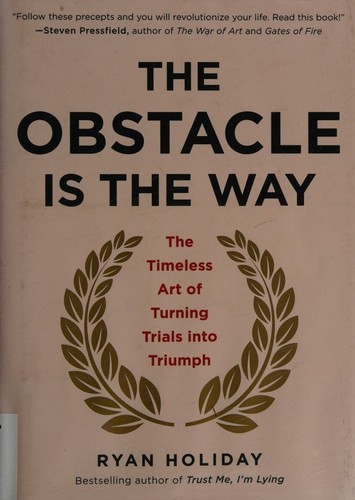
Depends on what you want from it. As a practical guide to handling frustration, setbacks, and ego, it holds up well. As a systematic introduction to Stoic philosophy, it is too fragmentary. Readers who want structured argument should start with Ryan Holiday's The Obstacle Is the Way, which synthesizes the ideas in a more accessible form.
-
How long is Meditations?
Most editions run 150 to 250 pages depending on translation and footnotes. At average reading pace it takes around four to five hours. The entries are short — many are a single paragraph — so it reads well in brief sessions, though the repetition rewards slower, more reflective reading.
-
Who should read Meditations?
People dealing with situations where their response is the only thing they can control: difficult colleagues, illness, failure, grief. It is most useful when read slowly and returned to over years rather than consumed once. It is less useful as a one-time productivity fix.
-
What is the most memorable idea in Meditations?
Probably the repeated insistence that the obstacle itself is the path — that adversity is not a delay before life begins, but the specific material through which character is built. Ryan Holiday drew his most widely read book title directly from this idea.
Similar books

Meditations vs.
Deciding between two books? Meditations vs Man's Search for Meaning .
