Talk to Money: Master the Game like its author wrote you back.
Get the ideas that fit your life — not generic summaries.
- Chat with the book
- Audiobook-style main ideas
- Adapts to your life and goals
- Helps you take action
Money: Master the Game, in detail
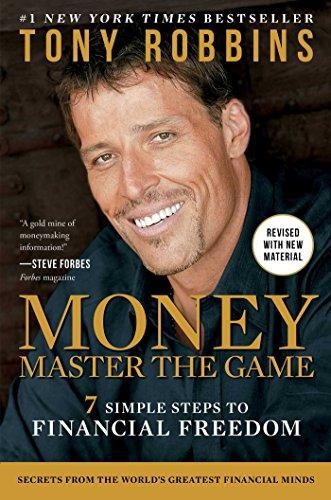
Money: Master the Game is Tony Robbins's attempt to distill financial wisdom from interviews with fifty of the world's most successful investors — including Ray Dalio, Warren Buffett, Jack Bogle, and Paul Tudor Jones — into a practical guide for ordinary people. The core argument is that the financial services industry is structurally misaligned with individual investors, and that understanding a small number of fundamental principles can help most people accumulate enough wealth to achieve what Robbins calls financial freedom.
The book is organized around seven steps. It begins with the psychology of commitment and moves through foundational concepts: the math of fees and compounding, the importance of tax-advantaged accounts, and the case for low-cost index funds over actively managed alternatives. The centerpiece is an extended discussion of asset allocation, particularly Ray Dalio's All Weather Portfolio — a diversified allocation across stocks, bonds, gold, and commodities designed to perform across different economic environments. Robbins argues that getting asset allocation right is more important than security selection, a position consistent with the academic evidence he cites.
The book's final sections turn to lifestyle: what financial freedom actually means in practice, how to calculate your own freedom number, and how to protect wealth once accumulated. Robbins interviews a range of investors at different wealth levels and repeatedly emphasizes that the goal is not to become a billionaire but to reach a point where work becomes optional.
The chief weakness is length. At nearly 700 pages, the book repeats itself considerably, and the celebrity interview format means quality is uneven. Some chapters deliver genuine insight; others feel like extended testimonials. The financial concepts themselves are mostly sound and consistent with evidence-based investing literature, but readers who have already encountered index fund investing, fee minimization, and diversification will find little that is technically new. For someone starting from scratch with no financial framework, it is comprehensive if exhausting.
The big ideas
- 1.
Compounding works exponentially, but fees compound equally — a 1-2% annual fee over 30 years can consume a third of your potential returns.
- 2.
Asset allocation, not stock picking, drives the majority of investment returns over time. Getting the allocation right matters more than individual security selection.
- 3.
Ray Dalio's All Weather Portfolio allocates across economic seasons — growth, recession, inflation, deflation — to reduce volatility without sacrificing long-term returns.
