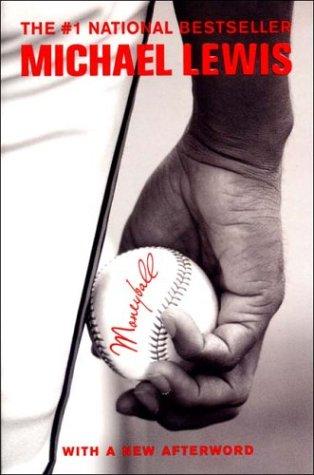
Talk to Moneyball: The Art of Winning an Unfair Game like its author wrote you back.
Get the ideas that fit your life — not generic summaries.
- Chat with the book
- Audiobook-style main ideas
- Adapts to your life and goals
- Helps you take action
Moneyball: The Art of Winning an Unfair Game, in detail
Moneyball is Michael Lewis's account of how Billy Beane, general manager of the Oakland Athletics, used statistical analysis to compete against teams with payrolls three times larger. The Oakland A's couldn't outspend the Yankees. What they could do was find players the rest of baseball systematically undervalued — and exploit the gap between what traditional scouts believed and what the numbers actually showed.
The book follows the 2002 season as Beane and his Harvard-educated assistant Paul DePodesta build a roster around on-base percentage, a stat most teams ignored in favor of batting average and scout intuition. Lewis weaves in the intellectual history of sabermetrics — the statistical movement pioneered by Bill James, a night security guard who spent decades writing Baseball Abstracts that almost nobody in professional baseball read. The A's were essentially the first organization to take James's ideas seriously and translate them into roster decisions.
Lewis is sharp on why the market inefficiency existed in the first place. Baseball had a century-long tradition of evaluating players through scouts who trusted their eyes, their instincts, and a set of observable traits — good face, good body, quick bat — that correlated poorly with actual performance. The scouts weren't stupid; they were operating on bad feedback loops. A player looked like a major leaguer. The scouts said so. He got signed. Whether he actually helped win games was harder to track and easier to explain away. The people doing the evaluation weren't the same people suffering the consequences of being wrong.
The book is also a story about institutions resisting information that threatens existing hierarchies. The A's success didn't immediately change how baseball worked — teams with money could afford to be wrong, and the sport's old guard had decades invested in the old methods. Lewis tells the story with more empathy for the scouts than you might expect, which keeps it from becoming a simple parable about data beating gut feeling. The argument is more specific: in markets where the feedback is slow and the evaluation criteria are inherited rather than examined, statistical thinking finds edges. That applies well beyond baseball.
The big ideas
- 1.
Market inefficiencies persist longest where feedback loops are slow and evaluation criteria are inherited rather than tested. Baseball scouts were measuring the wrong things for a century because nobody examined the assumption.
- 2.
On-base percentage — how often a batter reaches base — predicts runs far better than batting average, yet it was systematically underpriced in the baseball labor market in the late 1990s.
- 3.
The Oakland A's competitive advantage wasn't just using statistics. It was using statistics nobody else was using yet. Once other teams caught up, the edge disappeared and Oakland had to find new inefficiencies.
